
Dental Team Burnout: Signs Every Clinic Should Watch
Burnout among dental teams is a growing crisis in the UK, impacting staff wellbeing, patient care, and clinic operations. Here’s what you need to know:
- Key Signs: Constant fatigue, emotional disconnection from patients, increased mistakes, and low motivation.
- Causes: Heavy workloads, stressful patient interactions, disorganised workflows, and lingering effects of the COVID-19 pandemic.
- Impact: Burnout leads to higher staff turnover, reduced patient satisfaction, and more errors in care.
- Solutions: Simplify admin with user-friendly tools like Remedico’s Smart Calendar, offer flexible schedules, and prioritise team wellbeing through regular check-ins and support.
61% of UK dental staff report high emotional exhaustion, and public satisfaction with NHS dentistry has hit a low of 24%. Addressing burnout early protects your team, patients, and clinic reputation.
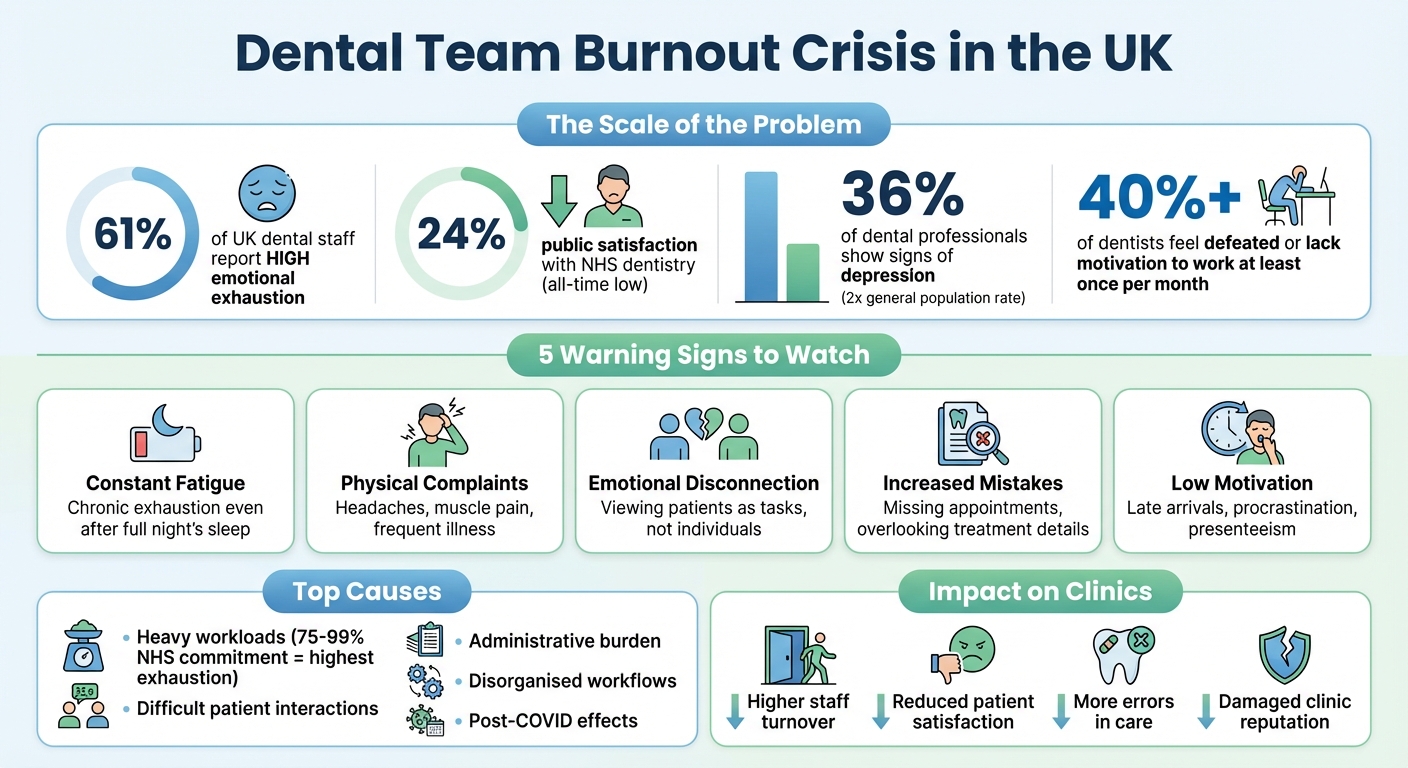
@figure {UK Dental Staff Burnout Statistics and Warning Signs} :::
Burnout in dentistry: What it is + how to overcome it
5 Signs Your Dental Team Is Burning Out
Recognising burnout early can make a huge difference in avoiding serious issues like frequent absences or staff turnover. The warning signs usually show up in three key areas: physical health, emotional wellbeing, and work habits.
Constant Tiredness and Physical Complaints
One of the clearest indicators of burnout is chronic fatigue. Team members may feel drained even after a full night’s sleep, making it hard to face the day. This exhaustion often becomes the norm.
Burnout also brings physical symptoms like tension headaches, muscle pain (especially in the hands and arms due to repetitive strain), and disrupted sleep. Stress can weaken the immune system, leading to more frequent illnesses. Changes in eating habits are another clue – skipping meals, relying on quick snacks, or completely forgetting to eat during busy days are common patterns.
But burnout doesn’t just wear people down physically; it also takes an emotional toll.
Feeling Disconnected from Patients and Colleagues
Burnout often leads to depersonalisation, where staff begin to view patients as tasks rather than individuals. Compassion fatigue sets in, making it harder to form emotional connections with those they care for.
This emotional detachment can show up as irritability, cynicism, or open frustration. Team members might avoid social interactions, like skipping team lunches or steering clear of casual chats. Some even feel a growing sense of failure, as if their efforts no longer matter. This emotional withdrawal doesn’t just affect team morale – it can also impact patient care and satisfaction.
Mistakes, Missed Tasks, and Low Motivation
When burnout takes hold, even routine tasks can feel overwhelming. Staff who once thrived on handling complex cases may find themselves making errors – missing appointments, overlooking treatment details, or forgetting critical paperwork like insurance scans [7].
“Stress is not only affect the dentist, it affects the entire office. The team’s dynamics, behaviors and overall performance can suffer, risking poor clinical judgment and improper care.”
Changes in behaviour become evident too. Employees might show up late, procrastinate on important tasks, or seem physically present but mentally checked out. This phenomenon, known as presenteeism, is a growing issue. In fact, over 40% of dentists report feeling defeated or lacking the motivation to come to work at least once a month [5]. The energy and passion that once drove them can simply fade away.
What Causes Burnout in Dental Practices
Burnout doesn’t happen overnight - it builds up when workplace pressures are left unchecked. In UK dental practices, there are several factors that contribute to this exhaustion, impacting not only the well-being of staff but also the quality of care provided to patients.
Too Many Patients and Not Enough Time
The workload in dentistry can be overwhelming. A study revealed that 61% of UK dental professionals scored “high” on the emotional exhaustion scale, highlighting the intense pressure many face[1]. Those with a high NHS commitment (75%-99%) reported more emotional exhaustion and depressive symptoms compared to those working fully within the NHS or balancing NHS and private work[1].
Adding to this is the burden of administrative tasks and modern dental software, which often stretch working hours and eat into recovery time[2]. When time is already scarce, the emotional challenges of the job can amplify the risk of burnout.
Difficult Patients and Emotional Stress
Dentists and their teams frequently deal with anxious patients and challenging cases, which can take a significant mental toll. Receptionists and practice managers, in particular, often bear the brunt of patient frustration and aggression, which has been rising as access to NHS dental services becomes more difficult. With public satisfaction with NHS dentistry at an all-time low of 24% [1], these interactions can leave staff feeling drained and even cynical.
“A stressed, exhausted dentist is more prone to errors and thus leaving us in a constant loop of anxiety and fear.”
This cycle of stress and fear can make mistakes more likely, which only adds to the anxiety. It’s a vicious loop that’s hard to break without addressing workplace stressors.
Poor Scheduling and Disorganised Workflows
Disorganised appointment systems and unclear processes can sap energy from dental teams. When workflows are chaotic, staff often end up skipping breaks, working through lunch, or staying late to finish paperwork. The combination of physical strain from standing all day and mental exhaustion from non-stop work takes a heavy toll[3].
Inefficient scheduling doesn’t just impact energy levels; it also increases the risk of errors. Outdated or clunky software can add to the problem, creating more admin work - like billing, e-signing, and sending manual reminders - rather than simplifying tasks[2]. Streamlined systems and better scheduling could help staff reclaim time to rest and recover, reducing both errors and emotional fatigue.
How to Prevent Dental Staff Burnout
Taking proactive steps can help prevent burnout among dental staff. By addressing workload challenges, streamlining processes, and prioritising team wellbeing, practice owners can create an environment that supports both their employees and the smooth operation of the practice.
Cut Admin Work with Better Software
Inefficient workflows are a major contributor to burnout. Tasks like manual billing, handling paper forms, and using outdated appointment systems can drain your team’s energy, often leading to skipped breaks or late hours. Automating routine tasks - such as e-signatures, billing (including insurance and VAT), and prescription management - can save your staff valuable time every week [2].
However, it’s important to avoid software that’s overly complicated, as it can lead to “technostress” and further strain your team [2]. Opt for tools that are user-friendly and designed to simplify processes. For example, Remedico’s Smart Calendar and Patient Flow™ help close scheduling gaps, while RemedicoGPT™ can generate reports and complete forms in seconds. These tools allow staff to focus more on patient care and less on administrative burdens.
Give Your Team Flexible Hours and Fair Workloads
Heavy workloads and rigid schedules are another key source of stress. Studies show that dental professionals with NHS commitments of 75–99% face significantly higher levels of emotional exhaustion compared to those with more balanced responsibilities [1]. Offering flexible scheduling and ensuring staff have protected time for short breaks - even just 15 minutes - can help prevent fatigue and promote a healthier work–life balance [2][3].
During particularly busy periods or holidays, consider hiring temporary staff to ease the pressure on your existing team. This approach can prevent overworking your core staff and maintain morale [3].
Build a Team That Supports Each Other
A supportive team dynamic can counter the feelings of isolation often experienced by burnt-out staff. Regular check-ins provide an opportunity for employees to express concerns and release stress before it builds up [2][3]. As Nicola Quinn puts it:
“A problem shared is a problem halved… Encouraging your staff to be open and talk when they’re feeling overworked will make them feel better” [3].
Fostering a culture of openness and prioritising mental health is equally important. Dr Aditi Bhalla, a Specialist Dentist and Psychotherapist, highlights this by saying:
“We know regular check-ups for our patients will help them to prevent any oral disease and catch things early on, so why don’t we check in on ourselves and our wellbeing?” [6].
Scheduling regular wellbeing check-ins and providing access to mentorship or psychological training can strengthen team resilience, helping to address stress before it becomes overwhelming [2][6].
Implementing these strategies can create a healthier, more supportive workplace, setting the stage for long-term success.
Real Example: How One UK Practice Cut Staff Burnout
A dental practice in England took a proactive approach to tackle staff burnout after participating in the Mental Health IN Dental SETtings U.K. Project. This survey, which included 1,507 dental professionals, highlighted the prevalence of burnout in the industry [1]. Using the Maslach Burnout Inventory (MBI), the practice assessed key factors like emotional exhaustion, depersonalisation, and personal accomplishment. The results pointed to inefficient administrative processes as a major source of stress and staff turnover [2].
To combat these challenges, the practice introduced several tech-driven solutions. They adopted Remedico’s Smart Calendar and Remindico AI Appointment Assistant to automate appointment reminders and reduce no-shows. Routine tasks like e-signing and report generation were streamlined with RemedicoGPT™, freeing up valuable time each week. Importantly, the platform’s user-friendly design minimised any risk of “technostress” that often comes with learning new, overly complicated systems [2].
Beyond technology, the practice also focused on creating a supportive work environment. Flexible scheduling and regular wellbeing check-ins allowed team members to voice concerns before they escalated. These measures not only improved workflows but also helped retain skilled professionals who might have otherwise left due to burnout. This example shows how targeted changes can make a real difference in reducing workplace stress and improving staff retention.
Key Takeaways: Spotting and Stopping Burnout
Dental team burnout doesn’t happen overnight - it’s a gradual process. Common warning signs include constant fatigue, skipping breaks, emotional disconnection from patients, and an uptick in mistakes. Alarmingly, these symptoms are reported at high rates among dental professionals in the UK [1].
What’s behind this? Overloaded schedules, crammed appointment slots, and piles of admin work top the list. When team members feel they’ve got no time left for family or rest, burnout is almost inevitable. Shockingly, over 36% of dental professionals report signs of depression - double the rate seen in the general population [1].
Addressing burnout early is key. Tools like Remedico’s Smart Calendar and RemedicoGPT™ can handle routine admin tasks, freeing up precious time. Offering flexible hours, enforcing regular breaks, and fostering an open, communicative workplace can help staff voice concerns before things spiral.
“A practice owner may lose qualified specialists sooner or later if their stress levels have not been reduced for a long time and the primary stressor has not been eliminated.”
Taking proactive steps to prevent burnout isn’t just about protecting your team - it’s about maintaining the quality of your clinic. Healthy, motivated staff provide better care, make fewer mistakes, and are more likely to stick around. This safeguards your patients and your clinic’s reputation in the long run.