How Dental Clinic Management Systems Improve Scheduling and Workflow
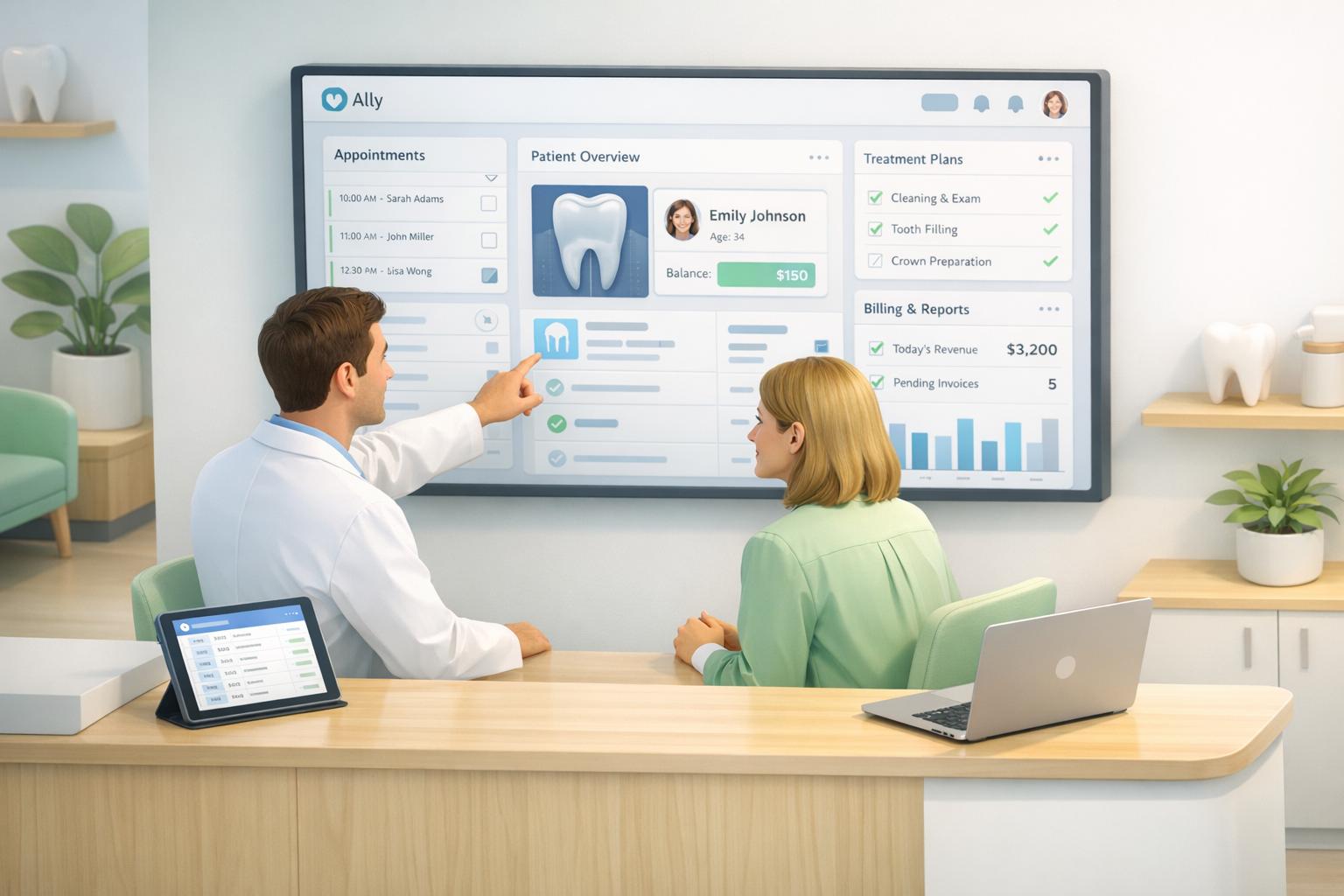
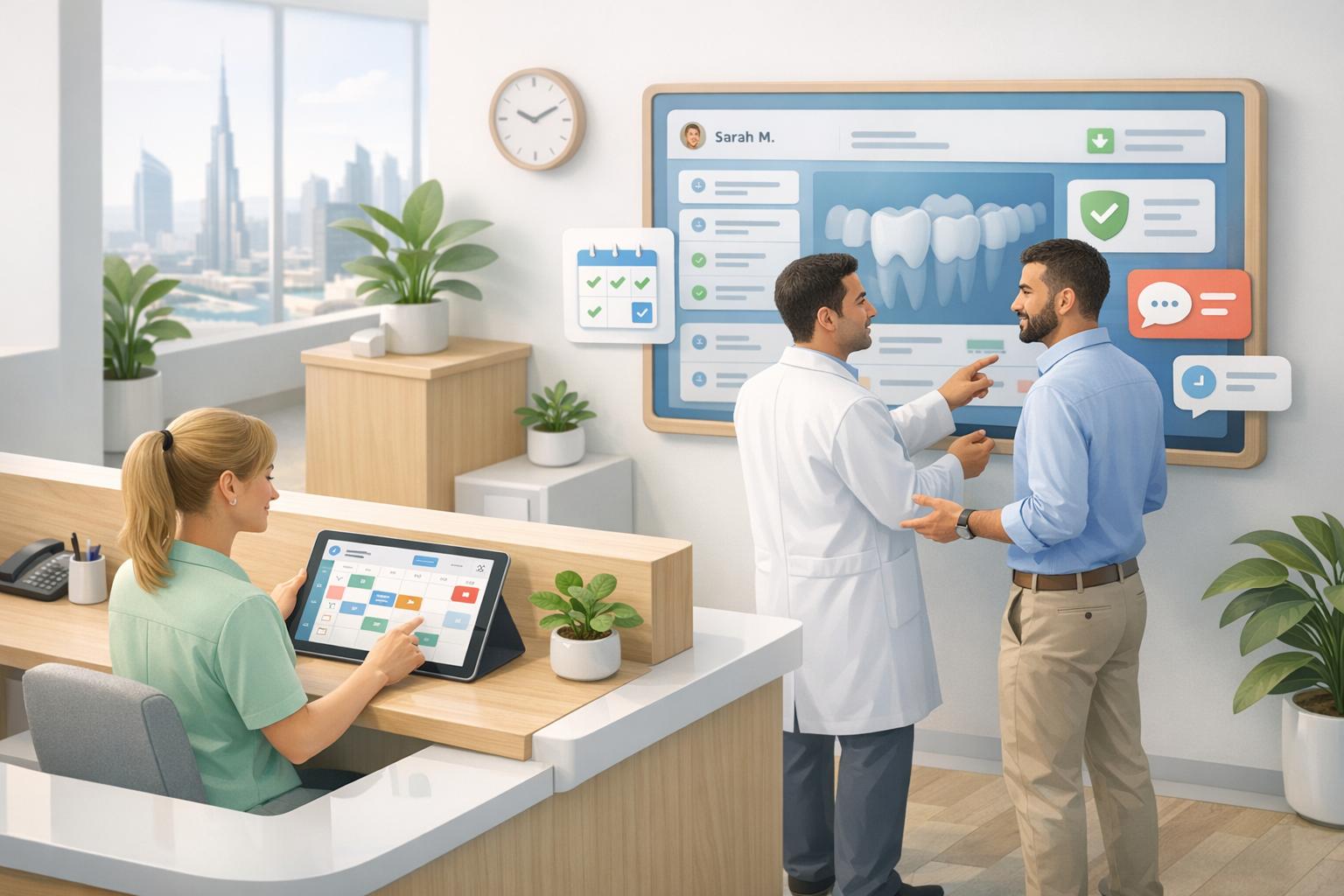
Dental clinic management systems simplify operations by combining scheduling, patient records, billing, and communication into one platform. Clinics in the UAE face challenges like high no-show rates (22.5%) and long patient wait times (34 minutes). These systems address these issues with:
- Automated reminders via WhatsApp, SMS, and email, reducing no-show rates to 1.9%.
- Centralised scheduling with smart calendars to avoid double-bookings and manage walk-ins.
- Integrated billing and insurance tools that cut errors by 40% and ensure compliance with NABIDH and Riayati.
- Digital patient records for faster, error-free workflows and better care delivery.
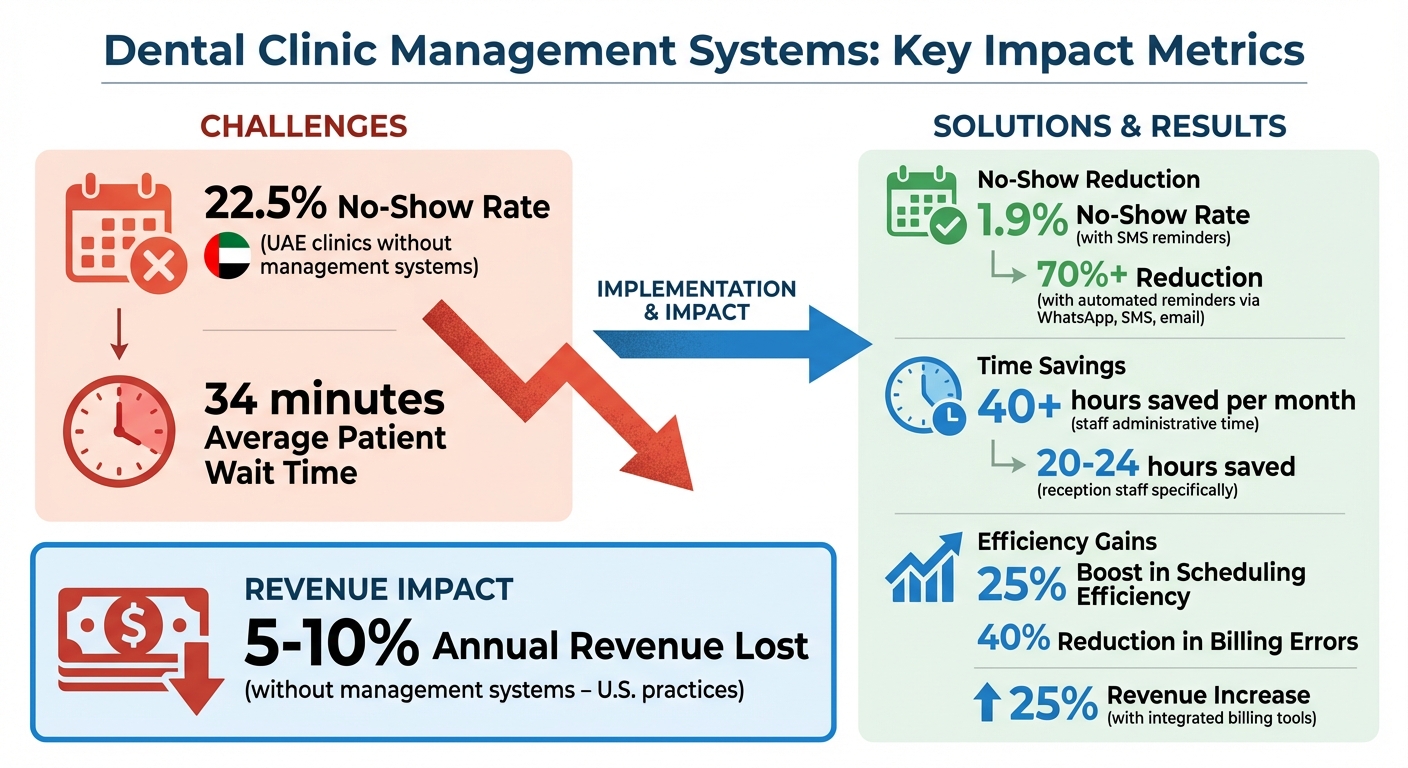
@figure {How Dental Management Systems Reduce No-Shows and Administrative Time} :::
Top 10 Best Dental Practice Management Systems in 2025
What Are Dental Clinic Management Systems?
A dental clinic management system is a digital platform that combines clinical, administrative, and financial tasks into one streamlined solution. It handles everything from scheduling appointments and managing patient records to billing and communication.
“Dental practice management software is the core platform that runs the business and clinical operations of a dental practice. It centralizes patient information and supports day-to-day workflows so teams can schedule, chart, diagnose, present treatment, communicate with patients, submit claims, and analyze performance from one place.” - Kay Saleh, Chief Technology Officer, Oryx [7]
These platforms eliminate the need for paper files, ensuring data flows smoothly without manual input. This sets the foundation for understanding how they enhance scheduling and overall clinic efficiency.
Core Features of Dental Clinic Management Systems
Dental management systems come packed with features designed to simplify operations. These include:
- Appointment scheduling with colour-coded calendars and views for multiple providers.
- Electronic dental records (EDR) to store treatment histories, X-rays, and other patient data.
- Billing and invoicing tools that integrate with treatment plans for seamless financial management.
- Treatment planning tools with 3D visual charting for better case presentation.
- Patient communication hubs offering WhatsApp, SMS, and email reminders.
- Insurance integration for real-time eligibility checks and claims processing.
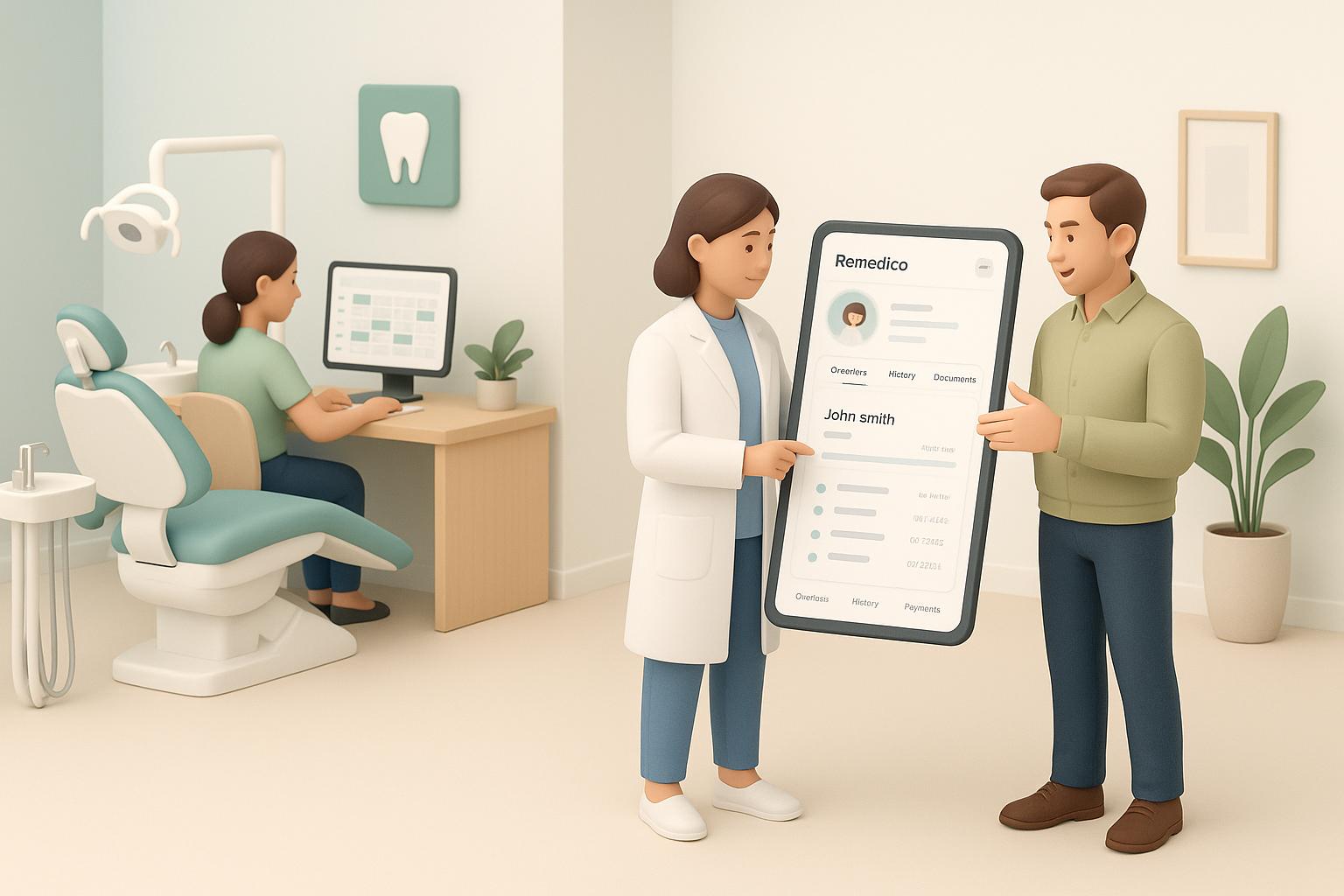
Some platforms go a step further. For instance, Remedico provides AI-powered tools like RemedicoGPT™ to automate paperwork and Dentaverse® for virtual reality treatment presentations. It also ensures compliance with NABIDH and Riayati standards, critical for UAE-based clinics.
Why Clinics Need These Systems
These systems solve many of the operational headaches clinics face daily.
Without a centralised platform, clinics often deal with double-bookings, missed appointments, and data errors. Staff can spend over 40 hours each month on repetitive tasks like confirming appointments and manually entering data across different systems [2].
In the UAE, inefficiencies in billing, scheduling, and disconnected workflows lead to substantial revenue losses. Globally, U.S. dental practices lose 5–10% of their annual revenue to similar issues [5]. By adopting centralised management systems, clinics can achieve a 25% boost in scheduling efficiency [6] and cut administrative errors by 40% [8]. This allows staff to focus more on patient care rather than being bogged down by paperwork.
How These Systems Improve Scheduling
Dental clinics often face challenges like double-bookings, no-shows, and the inefficiencies of manual scheduling. These issues not only waste time but also impact revenue. Dental clinic management systems tackle these problems head-on by automating scheduling and seamlessly tying it to patient records. The result? A more efficient clinic workflow and a better overall patient experience.
Centralised Appointment Scheduling
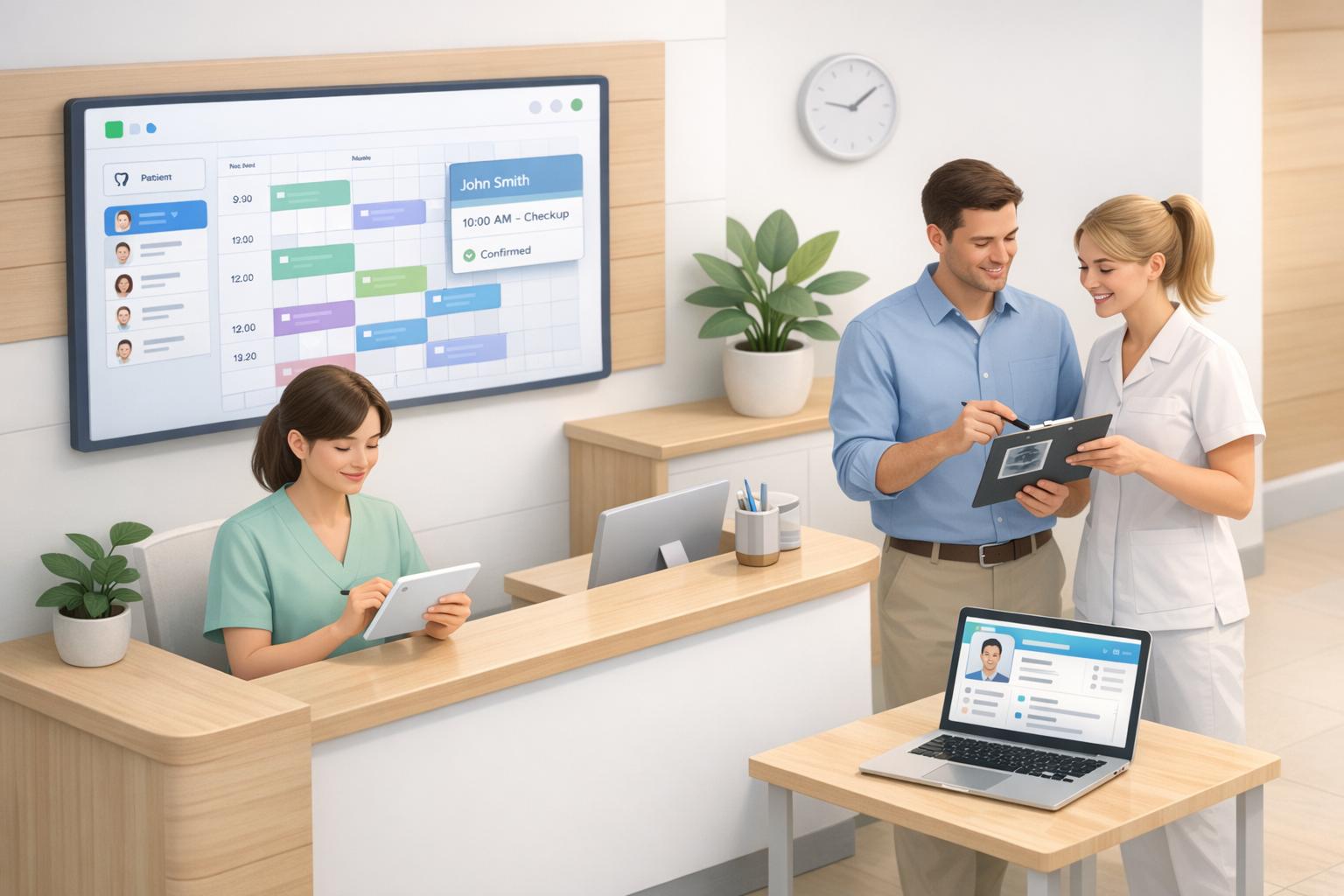
A Smart Calendar provides a real-time overview of providers, chairs, and equipment, making it easier for receptionists to manage bookings. With drag-and-drop functionality, staff can quickly adjust appointments, filter by procedure type, and identify idle periods [2][9].
Colour-coded displays simplify scheduling by distinguishing between appointment durations - say, a 15-minute consultation versus a 45-minute treatment. Customisable booking rules help avoid double-bookings, while visual alerts flag overbookings or gaps, ensuring a balanced schedule throughout the day [2][9].
Online Booking and Automated Reminders
Online booking portals streamline the process by directly syncing appointments with the Electronic Medical Record. This eliminates the need for manual data entry, reducing errors and saving time.
Automated reminders sent via WhatsApp, SMS, and email drastically cut no-show rates - by over 70%, in fact. SMS reminders alone can bring no-show rates down to just 1.9% [1][9]. In the UAE, WhatsApp reminders are particularly effective due to their high engagement rates [9]. These features collectively free up reception staff, saving them around 20–24 hours of administrative work every month [2].
Walk-In and Waiting List Management
Walk-ins and last-minute cancellations can throw off even the best-planned schedules. Modern systems address this with intelligent waiting lists that automatically offer cancelled slots to other patients [9]. Real-time chair allocation ensures walk-in patients are registered and assigned to available providers without delay [2][3].
Additionally, buffer times of 5–10 minutes help absorb small delays, while AI-powered tools group similar procedures and efficiently fill schedule gaps [9]. This approach ensures chairs stay occupied and patient flow remains steady, even during peak times.
How These Systems Improve Workflow
Dental clinic management systems streamline both clinical and administrative tasks, saving time and allowing staff to focus on what matters most - patient care. By centralising data and processes, these systems enhance record accuracy and speed up tasks like billing and insurance management.
Integrated Patient Records and Dental Charting
Electronic dental records bring everything together - treatment histories, X-rays, prescriptions, and clinical notes - on a single platform. Tools like 3D charting go a step further, documenting tooth-specific conditions while automatically generating billing codes [6][11]. Customisable templates for procedures ensure consistent documentation, reducing the risk of missing details and making it easier to turn clinical notes into accurate billing entries [11].
Digital intake forms, completed on patients’ phones, eliminate issues like illegible handwriting and transcription errors [8]. This seamless record-keeping system creates a foundation for a more organised and predictable patient journey.
Standardised Patient Journey
With a standardised workflow in place, every patient follows the same process - from check-in to treatment and checkout. For example, when a dentist updates a treatment plan chairside using a tablet, the front desk can see the changes instantly. This allows them to discuss financing options or book follow-up appointments without any delays [10].
Secure messaging and team chat features allow assistants and dentists to communicate directly with the reception desk from the operatory, cutting down on unnecessary trips back and forth [10]. Morning huddle reports provide a snapshot of the day’s schedule, highlighting unscheduled treatments and specific patient needs. Dental Intelligence, used by thousands of clinics, describes this as starting the day with all patient forms completed, appointments confirmed, operatories ready, and the team aligned on daily goals [10].
“Remedico has changed the way we deliver care. I have seen the shift in teamwork change as every doctor is now in the driver’s seat taking control over important daily admin work from updating patient diagnostics to explaining treatment plans, invoicing and monitoring their own progress.” Dr. Saghi Helmi, General & Cosmetic Dentist, Vilafortuny Clinic [2]
With this streamlined approach, automated systems for billing and insurance further reduce administrative bottlenecks.
Billing, Invoicing, and Insurance Integration
Billing systems sync directly with clinical charts, cutting manual coding errors by up to 40% [6]. Real-time insurance verification at check-in ensures patient eligibility, avoiding claim denials [5].
For clinics in the UAE, integration with platforms like Riayati and NABIDH simplifies compliance by automatically handling HL7 formatting and secure data transmission, reducing manual workloads [4]. Consent forms with e-signatures are saved directly to patient records, eliminating the need for manual uploads and saving staff an estimated 9–10 hours each month [2].
Integrated VoIP systems also play a key role by displaying patient information instantly during calls. This allows reception staff to quickly share relevant details with the back office, streamlining communication and ensuring smooth patient handoffs throughout the day [10][12]. The result? Fewer errors and a more efficient workflow from start to finish.
3 Common Mistakes When Adopting Dental Management Systems
Rushing into a new dental management system can lead to wasted time, staff frustration, and underused features. The difference between a smooth transition and months of disruption often boils down to avoiding a few key mistakes. Let’s explore three common pitfalls clinics should steer clear of during system adoption.
Choosing Software Without Mapping Workflow
One of the biggest mistakes clinics make is selecting software based solely on its features rather than how well it fits their existing processes. Before diving into software options, take the time to map out your clinic’s current workflow. Identify any bottlenecks or inefficiencies that need addressing. A system that looks impressive on paper might not align with your day-to-day operations, leading to more headaches than solutions.
Feedback from clinics in the UAE underscores the importance of this step. Mapping workflows upfront ensures a smoother integration of new tools and avoids unnecessary friction.
For clinics in the UAE, regulatory compliance is another critical factor. Any system you choose must integrate with platforms like Riayati, which connects over 3,000 healthcare facilities and manages 1.9 billion medical records for 9.5 million patients, or NABIDH, to avoid legal complications [4]. Conduct a technical assessment of your clinic’s infrastructure and data needs before committing to any software [4].
And remember, selecting the right software is only part of the equation - managing your data migration is just as essential.
Overlooking Data Migration and Clean-Up
Data migration isn’t just about transferring records; it’s about ensuring that the data you move is accurate, clean, and standardised. Overlooking this step can result in duplicate entries, outdated information, or inconsistent data formats, all of which can create errors down the line.
Before migrating, clean your records thoroughly. Remove duplicate entries, update missing emergency contacts, and standardise field names (e.g., “BP” versus “BloodPressure_mmHg”) [13][14]. Run a pilot migration to identify and resolve formatting issues early. With clean data, you could complete the implementation process in as little as one week [4].
However, even the best system and cleanest data won’t deliver results without proper training.
Underestimating Team Training Needs
No matter how advanced the software is, it won’t succeed if your team doesn’t know how to use it. Training everyone - not just a few key users - is essential. Tailor training sessions to specific roles to ensure your team gets exactly what they need.
For example, office managers might require up to 12 weeks of training, while dental assistants may need less than 4 weeks [15]. Incorporate daily huddles - short, 10-minute morning meetings - to review workflows and address any questions or concerns [15][16]. Schedule training sessions in a distraction-free environment, away from the busy front desk, and plan formal refresher sessions every six months [15][16].
“Remedico has helped us with the work flow by creating simple and creative software… the support team always available and solved all the requirements we had.” - Dr. Enas, Dentist [2]
To minimise resistance, involve your team in the software selection process. Assign “super-users” who can provide mentorship and support to their colleagues during the transition [15][16].
Key Takeaways
Dental clinic management systems play a crucial role in streamlining operations and boosting revenue by bringing essential functions together in one platform.
Centralised Scheduling and Workflow
A well-designed dental clinic management system integrates scheduling, patient records, charting, billing, and communication into a single platform. This allows reception teams to manage all appointments through one calendar, eliminating the hassle of juggling paper schedules or multiple apps. Online booking empowers patients to pick their preferred time slots, cutting down on phone calls during peak hours. Plus, automated reminders can lower no-show rates by 30–40% [17]. From check-in to check-out, every step is handled on one screen, reducing errors like duplicate data entries and inaccurate invoices. This streamlined approach can save clinics over 40 hours of admin work each month [17].
Improved Patient Retention and Revenue
Scheduling efficiency is just the beginning. Automated reminders via SMS, WhatsApp, and email significantly reduce missed appointments and last-minute cancellations. Recall notifications, triggered by due dates in the electronic dental record, encourage patients to book follow-up visits without the need for manual phone calls. Integrated billing features simplify the process by generating invoices directly from treatment plans, verifying insurance details, and preparing claims with accurate codes. This reduces claim rejections and speeds up payment approvals. Additionally, text-to-pay options and straightforward revenue management tools have helped clinics boost revenue by 25% [17]. Over time, these enhancements can lead to substantial financial gains.
Solutions Tailored for UAE, MENA, and EU Clinics
Dental clinics in regions like the UAE, MENA, and the EU face unique challenges due to differing regulations, data protection laws, and insurance systems. Localisation is key to addressing these needs. Platforms like Remedico are designed with these specific markets in mind, offering features that comply with local privacy laws and health-data standards. For instance, they align with mandatory health authority platforms such as NABIDH in Dubai and Riayati in the Northern Emirates. This reduces compliance risks and eliminates the need for manual workarounds. By mirroring real clinic workflows, these systems also shorten onboarding time to just one week [4].
FAQs
How can dental clinic management systems help reduce missed appointments?
Dental clinic management systems play a key role in cutting down missed appointments. They do this by sending automated reminders via SMS, WhatsApp, or email. These reminders give patients a timely heads-up about their appointments, making it easier for them to either show up on time or reschedule if necessary.
On top of that, online rescheduling options simplify the process for patients, allowing them to adjust their appointments without needing to call the clinic. Research indicates that these tools can reduce no-show rates by as much as 30–40%, ensuring clinics run more efficiently while also preventing unnecessary revenue loss. :::
What are the must-have features in a dental clinic management system?
A dependable dental clinic management system should make your daily tasks simpler while boosting both patient care and clinic efficiency. It should handle repetitive tasks automatically, ensure adherence to UAE regulations, and bring all critical functions under one roof.
Key features to consider:
- Appointment automation and reminders: Tools like SMS or WhatsApp notifications can cut no-show rates by as much as 30% and make rescheduling hassle-free for patients.
- Integrated billing and invoicing: Automatically generate invoices, streamline insurance claims, and track payments in real time to keep financial processes smooth.
- Electronic dental records (EDR): Secure, searchable patient records with imaging and treatment plans that are accessible from any device, ensuring seamless care.
- Inventory management: Keep track of stock levels, set up auto-reorder alerts, and prevent supply shortages before they happen.
- Compliance tools: Features like data encryption, audit logs, and built-in support for UAE standards (such as NABIDH, DHA, and Riayati) help you meet regulatory requirements.
- Patient communication: Integrated chat and AI-powered reminders enhance patient engagement and retention, making interactions more efficient.
Opting for software with these capabilities can save time, reduce mistakes, and enable you to run a compliant and patient-focused clinic with ease. :::
How can dental clinic management systems enhance patient experience and loyalty?
Managing a dental clinic becomes much more efficient with the right system in place, and it directly impacts patient satisfaction and loyalty. For instance, streamlined appointment scheduling paired with automated reminders - via SMS or WhatsApp - can reduce missed appointments by as much as 30%. This ensures patients stick to their treatment plans without unnecessary delays.
On top of that, cutting-edge features like AR/VR treatment visualisations make a big difference. They help patients better understand procedures, which can ease their concerns and build confidence. These tools not only create a more seamless experience but also strengthen trust. When patients feel informed and cared for, they’re more likely to return and even recommend your clinic to others. :::