How Dentist Scheduling Tools Reduce No-Shows and Boost Efficiency
Missed appointments cost dental clinics tens of thousands of pounds annually. But there’s good news: dentist scheduling tools are helping practices recover lost revenue, reduce no-shows, and improve efficiency.
Here’s how these tools make a difference:
- Automated reminders: Reduce no-shows by 30–40% with SMS, email, or WhatsApp notifications.
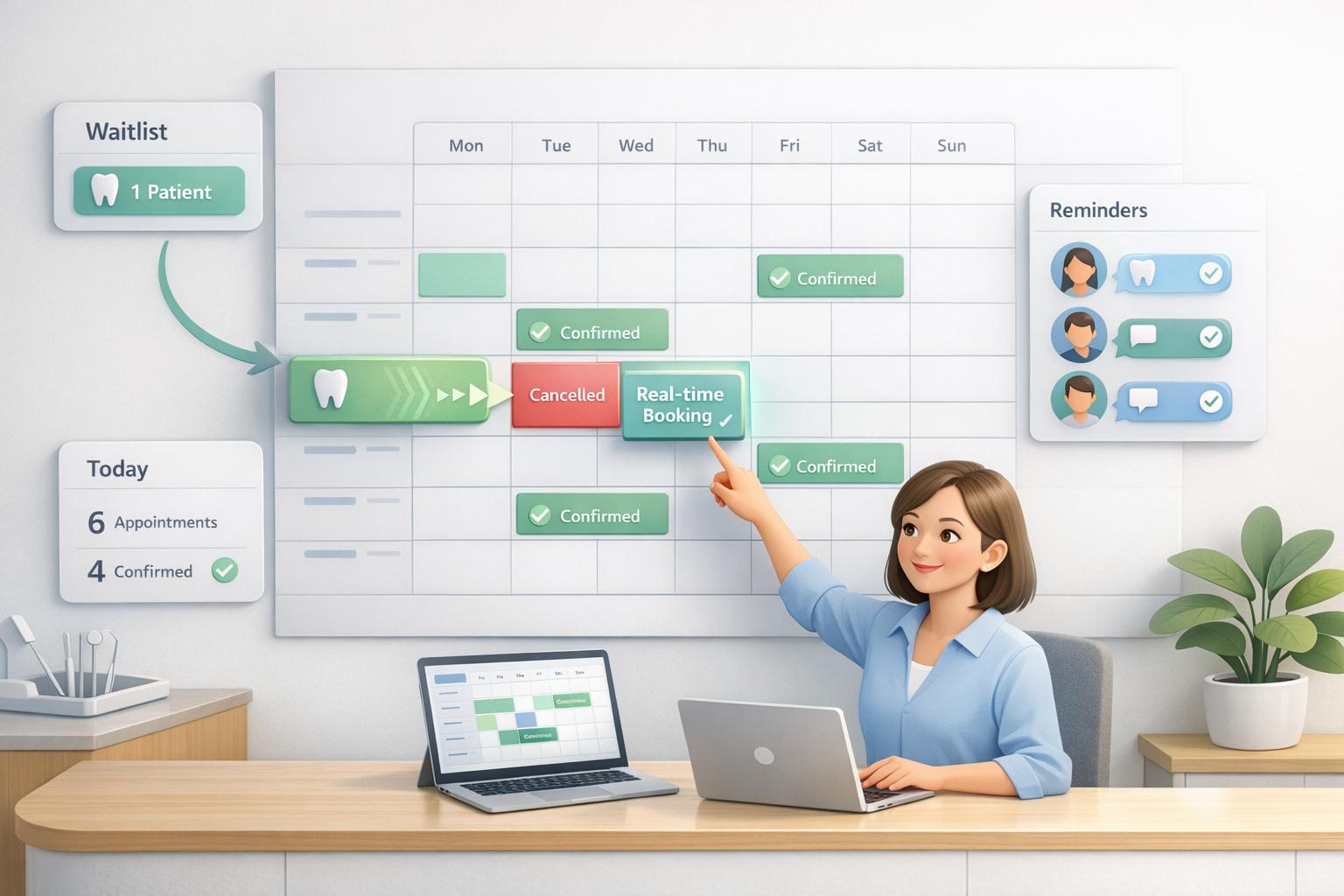
- Real-time booking: Patients can book 24/7, filling last-minute cancellations instantly.
- Waitlist management: Automatically fills 60–85% of cancelled slots, turning losses into revenue.
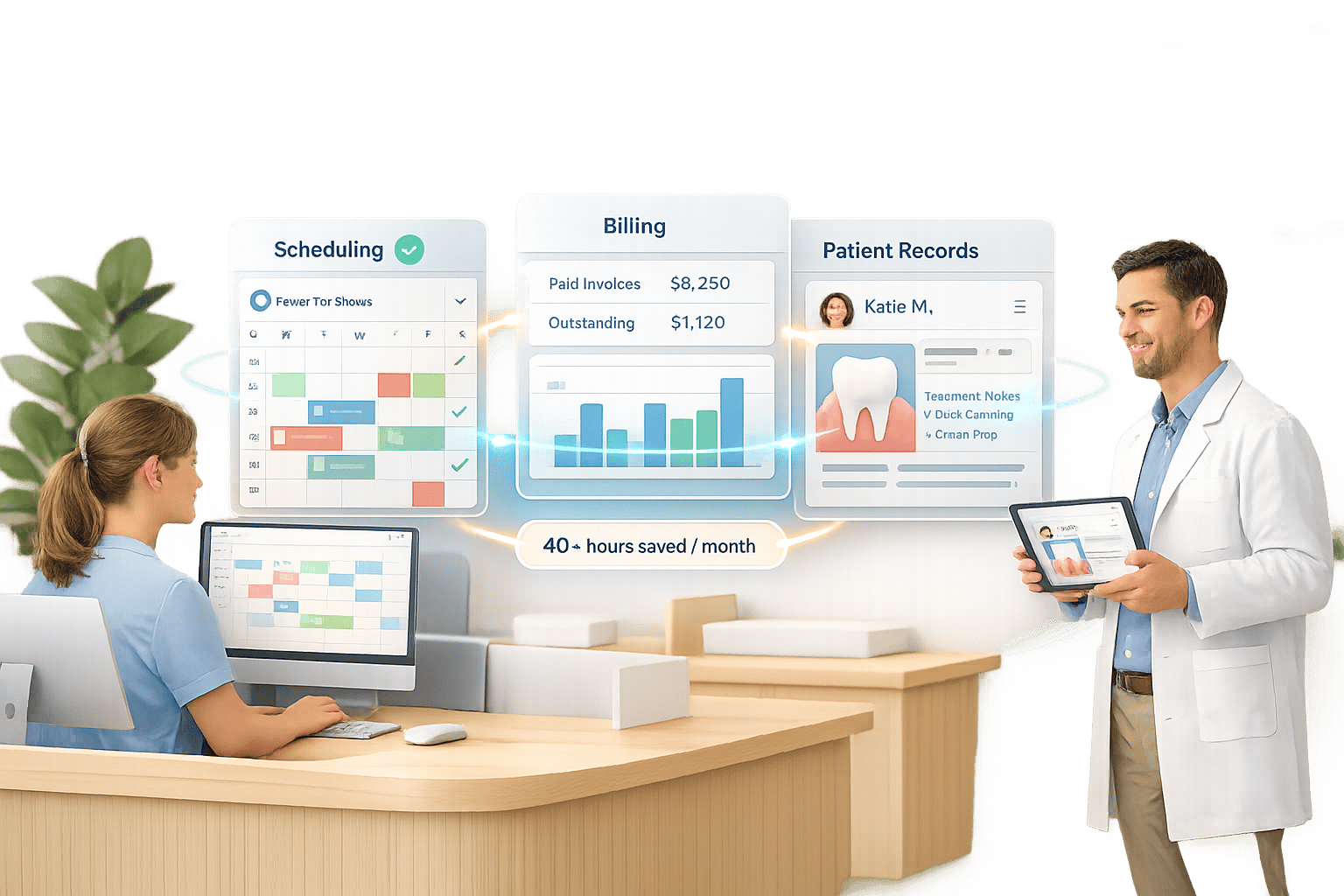
- Integrated systems: Syncs patient records, schedules, and billing for smoother workflows.
- Reduced admin work: Saves up to 8 hours per staff member weekly by automating confirmations and follow-ups.
@figure {How Dental Scheduling Software Reduces No-Shows and Increases Revenue} :::
Reduce No-Shows with Automated Appointment Voice Call Reminders | Weave Walkthrough
sbb-itb-d8b42ea
What Is Dental Appointment Scheduling Software and How Does It Work?
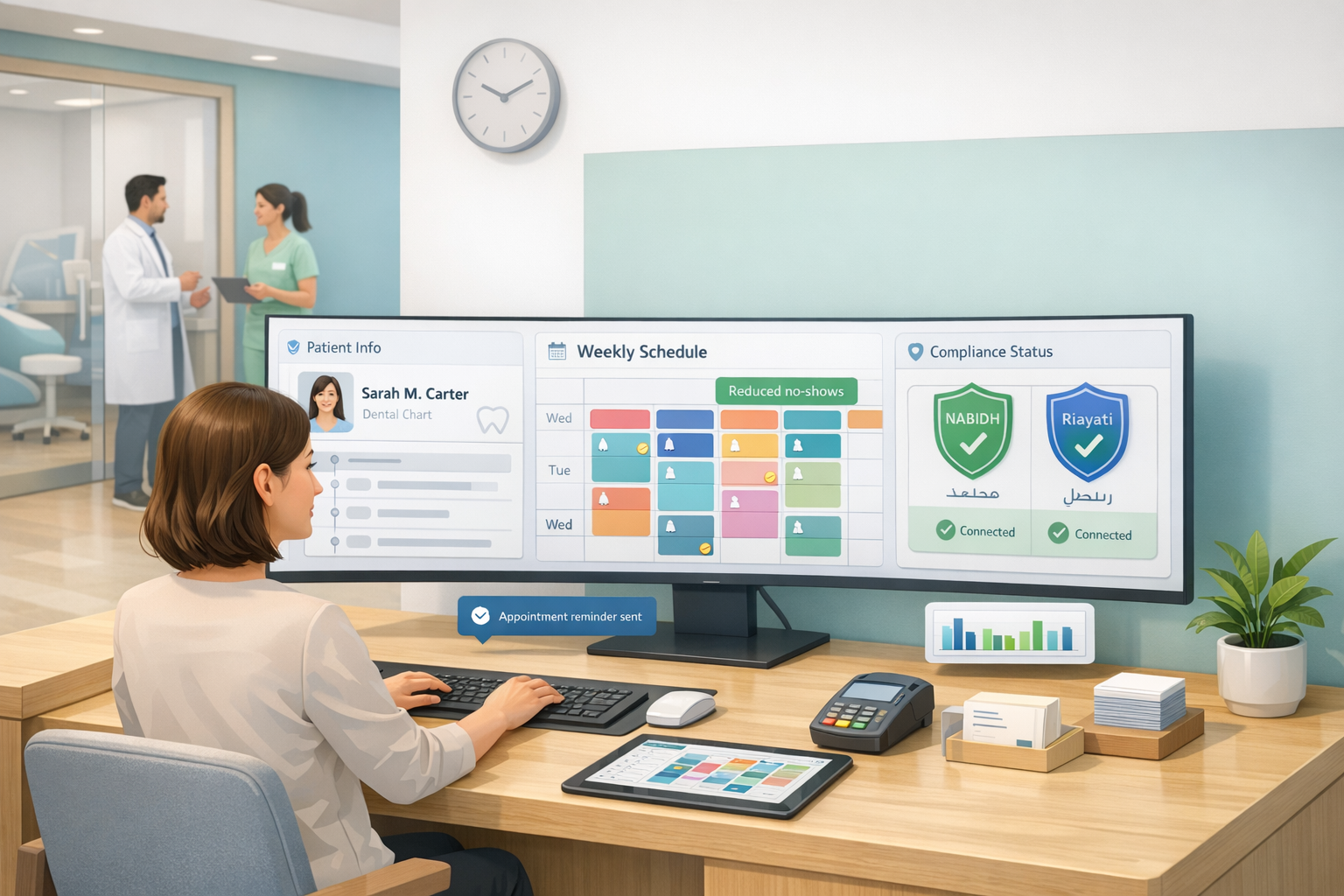
Dental appointment scheduling software is a modern tool that streamlines the booking process, replacing traditional paper-based systems. It automates tasks like scheduling, sending reminders, and tracking appointments in real time. By integrating with your practice management system, it ensures patient records, treatment plans, and availability stay up to date —a critical feature for Riayati-compliant clinics in the UAE [4][5][11].
This software centralises key aspects of clinic operations, including daily schedules, production figures, and utilisation rates. Patients can book directly through an online portal that updates instantly. If a cancellation occurs, the system notifies waitlisted patients automatically [4][5][12].
Core Features of Dental Scheduling Tools
Dental scheduling tools come with features designed to improve efficiency and patient experience.
Automated reminders are sent via text or email, prompting patients to confirm, reschedule, or cancel. This reduces no-shows without adding extra work for your front desk team. Clinics using two-way texting report fewer missed visits, as patients can respond directly from their phones [10][5][7].
Real-time booking displays live availability on your website or patient portal, making it possible for patients to book appointments 24/7. This reduces phone traffic and helps fill last-minute cancellations quickly. For instance, NexHealth’s virtual waitlist can fill cancellation slots, helping practices gain around 18 new patients each month [10][5][6].
Online patient portals empower patients to manage their own bookings. They can check upcoming appointments, reschedule, or cancel without needing to call the clinic. This self-service option not only boosts patient satisfaction but also frees up staff to focus on in-clinic tasks [4][5][12].
Waitlist management transforms cancellations into opportunities. When a time slot opens, the system instantly alerts patients who are waiting for an earlier appointment. Tools like CareStack’s Opportunity Miner further optimise scheduling by filling gaps efficiently [5][6].
Integration with practice management systems ensures that patient records, treatment plans, and billing details are all in one place. This integration allows seamless communication between scheduling tools and clinical workflows, helping staff avoid double-booking, flag pending treatments, and match appointments with the required time blocks [4][5][11][12].
Why No-Shows Hurt Clinics
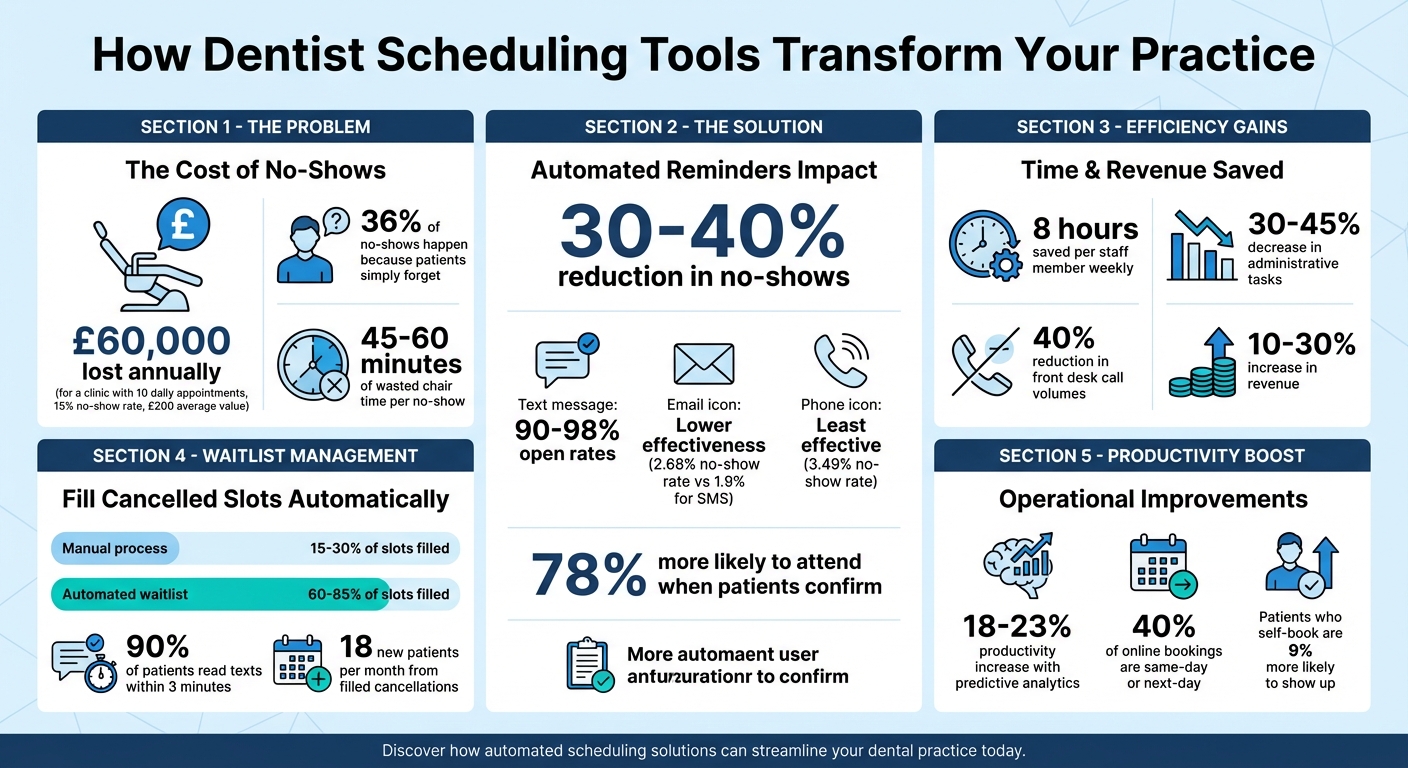
Missed appointments can have a major financial and operational impact on dental practices. For example, a clinic with 10 daily appointments, a 15% no-show rate, and an average appointment value of £200 could lose approximately £60,000 annually [8].
No-shows also disrupt workflow. Each missed appointment wastes 45–60 minutes of valuable chair time, leaving hygienists and assistants idle. This lowers overall productivity and reduces the clinic’s efficiency [9].
Filling these gaps manually is time-consuming for staff, who often spend hours making rescheduling calls. Without real-time tools, last-minute openings frequently go unused. Interestingly, 36% of no-shows occur simply because patients forget their appointments - a problem that automated reminders can easily address [9].
How Dentist Scheduling Tools Reduce No-Shows
Dentist scheduling tools minimise missed appointments by combining automated reminders, real-time booking, and intelligent waitlist management. Together, these features help keep schedules full while reducing the operational and financial strain caused by no-shows.
Automated Reminders and Follow-Ups
Automated reminders can reduce no-shows by an impressive 30–40% by contacting patients via SMS, email, or WhatsApp [13]. Among these, text messages are the most effective, boasting 90–98% open rates and a no-show rate of just 1.9%, compared to 2.68% for email and 3.49% for phone calls [2][14].
The most successful reminder strategy involves sending messages at three key points: 72 hours before (to help patients prepare), 24 hours before (to confirm attendance), and 2–4 hours before the appointment [13][14]. Patients who confirm their appointments are 78% more likely to attend than those who don’t respond [13].
Modern systems allow patients to reply directly to these reminders, whether they need to confirm, cancel, or reschedule - no phone calls required. This two-way communication not only reduces friction but also saves front desk staff hours of manual work each week. Some advanced tools, such as RemedicoGPT, even use conversational AI to answer common questions, like those about insurance or directions [14].
Real-Time Scheduling to Fill Gaps
Real-time booking tools ensure that cancelled slots don’t go unused. By showing live availability on your website, these systems let patients book appointments 24/7. Cancelled slots get filled instantly, keeping your schedule running smoothly.
Smart calendars simplify this process by displaying availability for providers, chairs, and equipment in one view. Staff can easily drag and drop appointments to optimise the schedule. Colour-coded procedure types make it easier to spot where cancellations fit best, while short buffers of 5–10 minutes between appointments help absorb minor delays and keep things on track.
This proactive scheduling approach works hand-in-hand with waitlist management, ensuring no slot goes to waste.
Waitlist Management for Missed Appointments
Automated waitlists are a game changer, filling 60–85% of cancelled appointments compared to just 15–30% with manual processes [15]. When a slot becomes available, the system immediately notifies patients who have requested earlier appointments. Since 90% of patients read text messages within 3 minutes, these openings are often filled almost instantly [15].
Patients who accept earlier slots through a waitlist tend to be more committed and less likely to miss their appointments. These systems can also prioritise patients based on factors like urgency, treatment type, or insurance, ensuring that high-priority cases are addressed first.
To keep the process efficient, response time limits (e.g., “confirm within 15 minutes”) are set. If the first patient doesn’t respond, the system automatically moves to the next in line, eliminating the need for back-and-forth calls. This streamlined approach allows your team to focus on providing care instead of chasing cancellations.
How Scheduling Tools Improve Efficiency for Dental Offices
Dental appointment scheduling software plays a key role in reducing administrative burdens. Practices using AI-powered scheduling tools report a 30–45% decrease in administrative tasks [17]. Cloud-based systems further enhance efficiency, saving around 8 hours per staff member each week [16].
Balancing Staff Schedules
Scheduling tools aren’t just about managing appointments - they also streamline daily operations. With smart calendars, you get a real-time overview of providers, chairs, and equipment availability. Features like drag-and-drop scheduling, procedure-specific filters, and idle period alerts make balancing workloads much simpler.
Predictive analytics take it a step further by forecasting busy periods based on historical trends. This allows practices to adjust staffing levels in advance, boosting productivity by 18–23% [17]. Time-off management ensures provider leave is accounted for, preventing double bookings, while shift management tools make swaps and approvals hassle-free. Morning huddle reports provide a daily snapshot of unscheduled treatments and patient-specific needs, keeping the entire team aligned and reducing the risk of missed tasks.
Reducing Administrative Work
Automation takes over many repetitive tasks, such as appointment confirmations and follow-ups. Patients can confirm, cancel, or reschedule directly through reminder messages, cutting front desk call volumes by up to 40% [17]. Digital intake forms integrate seamlessly with schedules, while billing systems automatically generate invoices once treatments are completed.
VoIP integration simplifies communication by displaying patient details during incoming calls, enabling receptionists to share relevant information with the back office. Task checklists assign responsibilities like sterilisation or lab tracking to team members, ensuring nothing falls through the cracks. Together, these features keep the clinic running smoothly while reducing manual workloads.
Improving Patient Engagement and Retention
Automated reminders do more than just reduce no-shows - they keep patients engaged and informed. Multi-stage reminders sent at strategic intervals make it easy for patients to confirm or reschedule appointments [13]. Adding personal touches, such as including the patient’s name and provider details in messages, further boosts engagement.
Online booking portals allow patients to schedule appointments anytime, meeting the demand for convenience. Integrated payment options, like pay-by-text, streamline the checkout process and enhance the overall experience. Advanced tools like 3D dental charting and AR/VR visualisations (such as Dentaverse®) help patients better understand their treatment plans, fostering trust and improving case acceptance.
Recall notifications tied to due dates in electronic dental records encourage patients to return for follow-up care. Many practices see a 10–30% increase in revenue after adopting these automated systems [1].
3 Common Mistakes When Using Dentist Scheduling Tools
Even the most advanced dental appointment scheduling software can fall short if certain pitfalls aren’t avoided. Many dental practices invest in modern tools but fail to fully leverage their potential, missing chances to streamline operations, connect with patients, or reduce manual tasks. Here are three common mistakes that can hold clinics back - and how to address them effectively.
Ignoring Mobile-Friendly Features
Did you know that over 60% of dental-related searches now happen on mobile devices? Yet, 45% of clinic websites are still not mobile-optimised [18][20]. When patients struggle to book appointments or receive reminders on their phones, they’re more likely to look elsewhere.
Mobile optimisation isn’t just about having a responsive website - it’s about creating a seamless experience. Features like SMS and WhatsApp reminders are far more effective than email because people check their phones constantly. For example, Dr. Lim’s Dental Practice in Penang saw a 156% jump in appointment calls within three months after improving their mobile presence and Google Business Profile in 2024 [18]. Similarly, Kare Mobile Inc. cut missed calls by 80% and saved staff two hours per day by using the Arini AI receptionist for mobile enquiries [19].
Mobile users also tend to abandon websites that take more than three seconds to load. To avoid this, clinics should implement click-to-call buttons, streamlined mobile forms, and 24/7 booking portals. Tools like Remedico’s Smart Calendar allow patients to book appointments anytime while enabling staff to manage schedules on the go.
While mobile optimisation is crucial, failing to use automated waitlist tools is another missed opportunity.
Not Using Waitlist Automation
Cancellations are inevitable, but many dental practices fail to take advantage of waitlist automation to fill those gaps. When a patient cancels, an automated system can instantly notify others who are eager to move their appointments forward. This keeps your schedule full and reduces revenue lost from empty slots.
Relying on manual waitlist management often leads to missed opportunities, as staff might not consistently reach out to backup patients. Automated systems, on the other hand, send instant notifications via SMS or WhatsApp, allowing patients to claim open slots within minutes. For example, Remedico’s Patient Flow™ tracks every patient interaction and manages waitlists automatically, ensuring no appointment slot goes unused.
However, even with automation, lack of system integration can create additional inefficiencies.
Overlooking System Integration
When scheduling tools don’t integrate with billing or patient management systems, they can create unnecessary double work. Entering the same data multiple times increases the risk of errors and slows down operations. In fact, inefficient scheduling and administrative mistakes can cost a dental practice up to £115,000 annually [19].
Integrated systems simplify workflows by syncing patient records, updating availability in real time, and connecting with billing systems and payment processors. This not only reduces duplicate data entry but also ensures a smoother experience for patients and staff alike. For instance, Remedico provides a unified platform that links scheduling, billing, and patient records. Their RemedicoGPT™ feature further streamlines tasks by auto-filling forms and generating reports in seconds, freeing up staff to focus on patient care.
Key Takeaways
Dental appointment scheduling software dramatically reduces missed appointments by 38% to 40%, thanks to automated reminders sent through SMS, WhatsApp, and email [13]. Even better, using two-way messaging for appointment confirmations leads to 78% fewer no-shows [13].
Online booking systems lower administrative workload by up to 45% and allow patients to book appointments outside regular office hours [3][21]. Interestingly, 40% of online bookings are made for the same or next day, helping to fill last-minute gaps effortlessly [21]. Patients who schedule their own appointments are 9% more likely to show up [21].
Automated waitlist management turns cancellations into immediate booking opportunities. When a cancellation occurs, the system instantly notifies backup patients, keeping the schedule full and minimising revenue loss. Many clinics report a 10% to 30% increase in revenue after adopting automated reminders [1].
Remedico’s tools - Smart Calendar, Patient Flow™, and Retention AI™ - combine all these capabilities in one platform. This helps UK dental practices cut missed appointments, maximise their schedules, and reduce admin burdens, all for £99 per doctor per month, with 1,000 free WhatsApp reminders included.