Dental Office Software: Streamlining Scheduling, Billing, and Records
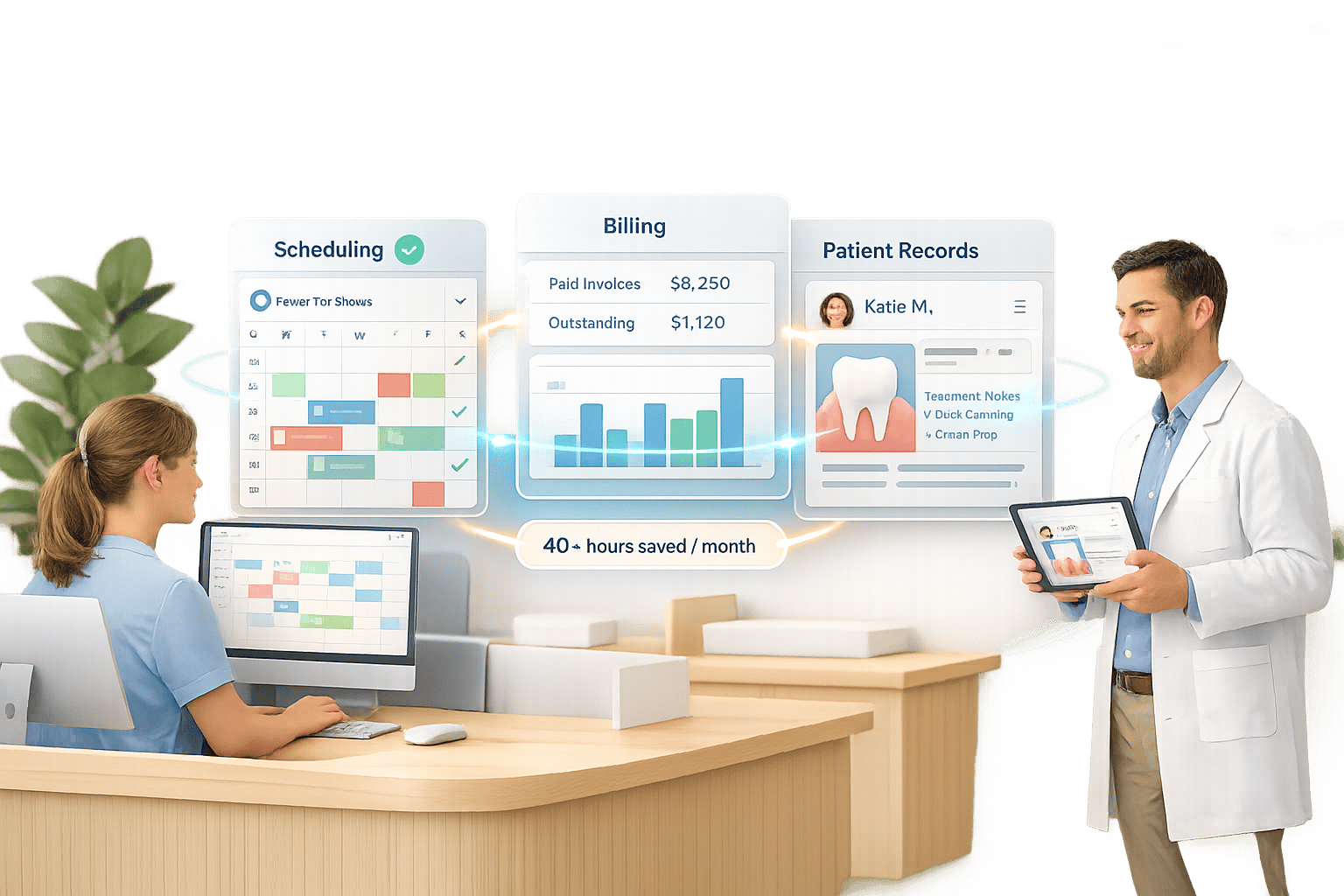
Managing a dental clinic is complex, but dental office software simplifies it by automating scheduling, billing, and record-keeping. Clinics save over 40 hours of admin time monthly by replacing manual tasks like appointment confirmations, insurance verification, and record updates. Tools like Remedico, Dentrix, and Curve Dental reduce no-show rates (from 7–18%) with automated reminders, speed up billing with real-time insurance checks, and provide instant access to patient records. These platforms help clinics handle more patients daily while improving operational efficiency.
Key highlights:
- Scheduling: Online booking, drag-and-drop calendars, and automated reminders cut admin workload by 20–24 hours/month.
- Billing: Real-time insurance verification reduces claim denials and accelerates reimbursements.
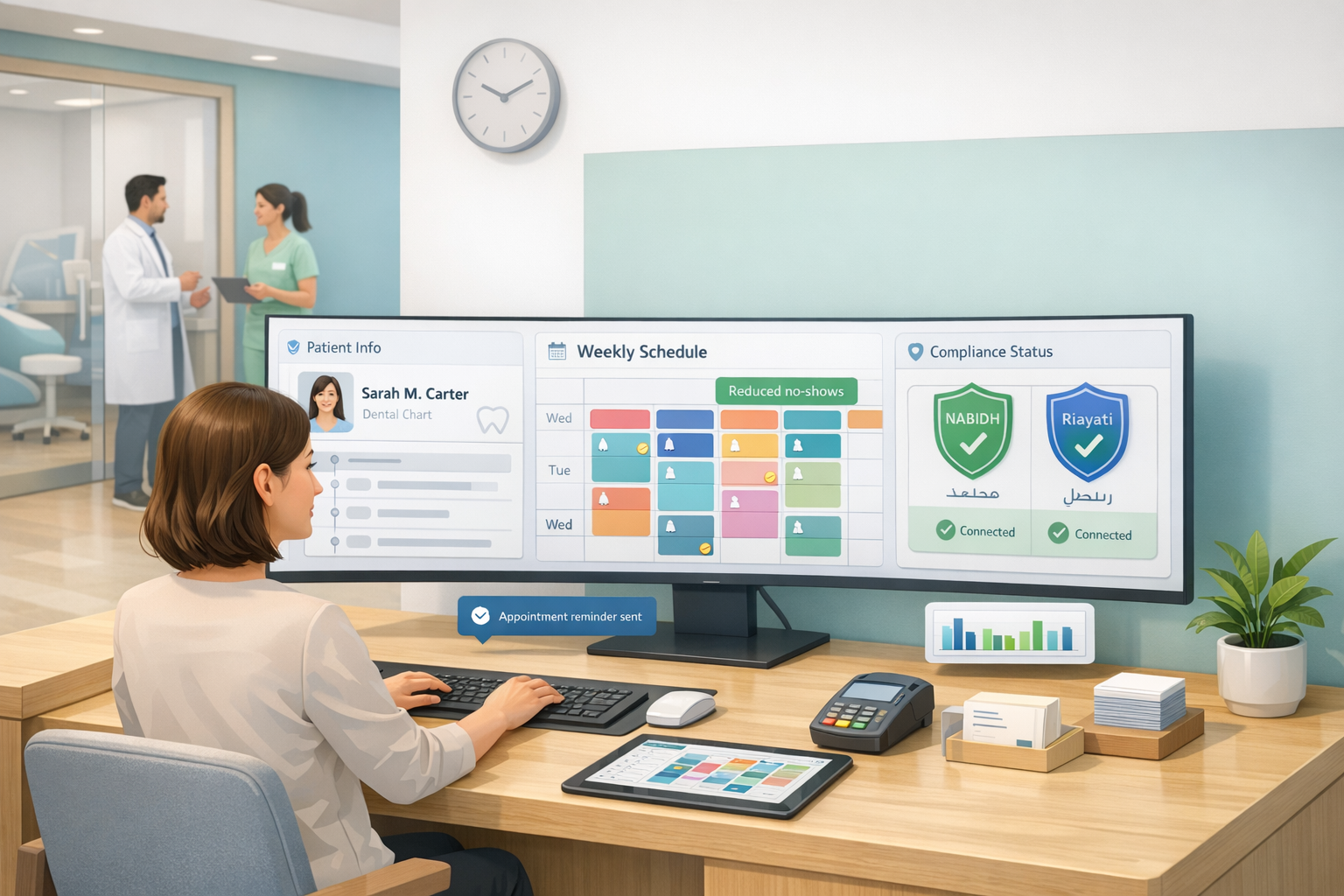
- Patient Records: Secure, cloud-based systems ensure instant access and compliance with UAE standards like NABIDH.
Whether it’s reducing errors or saving time, dental software is essential for modern clinics aiming to focus on patient care over admin tasks.
Top 10 Best Dental Practice Management Systems in 2025
sbb-itb-d8b42ea
What Is Dental Office Software and How Does It Help Clinics?
Dental office software is designed to streamline clinic operations by managing scheduling, billing, and patient records within a single dashboard. By replacing paper files and juggling multiple tools, this software reduces administrative tasks and ensures patient data stays organised.
With automation, staff no longer need to manually file consent forms or spend time on lengthy phone calls verifying insurance details. Billing teams can check insurance eligibility instantly and process claims faster, while dentists have immediate access to patient charts, X-rays, and treatment histories during consultations.
How It Simplifies Appointment Scheduling
Smart scheduling features make managing appointments much easier. With a clear view of all chairs and providers, staff can avoid double bookings. Drag-and-drop functionality allows quick adjustments, while online booking portals let patients request appointments directly through a website or even WhatsApp, cutting out time-consuming phone calls.
Automated reminders and confirmations - sent via SMS, email, or WhatsApp - help reduce no-show rates, which typically range from 7% to 18% [4]. For instance, systems like Dentrix and Curve Dental handle these notifications automatically, saving clinics up to 20–24 hours per month on scheduling tasks [1]. Some software even adjusts calendars dynamically to minimise patient wait times.
Streamlining scheduling also paves the way for smoother billing and insurance processes.
How It Handles Billing and Insurance
Billing and insurance processes become much faster and more accurate with dental office software. By verifying insurance eligibility in real time - even before appointments - clinics can avoid claim denials. Solutions like Dentrix speed up reimbursements by catching errors early, ensuring cleaner claims [3]. Tasks like co-pay collection, claim submissions, and denial management are all handled within the same system, eliminating the need to switch between tools.
This integrated system accelerates revenue cycles. Instead of waiting days for insurance approvals or chasing overdue payments, clinics get real-time updates on claims and payment timelines. Automation also reduces manual entry errors, which are a common cause of reimbursement delays.
These billing efficiencies complement the software’s ability to manage patient records effectively.
How It Manages Patient Records Digitally
Digital record management is another major advantage. By replacing paper files with secure, cloud-based systems, clinics can access patient histories instantly. Tools like digital charting, 3D models, and X-ray integration allow dentists to update records during visits. AI-powered features, such as RemedicoGPT™, can even transform voice notes into clinical documentation, saving valuable time between appointments [1].
Platforms like Curve Dental and Open Dental ensure data security with encryption, audit trails, and automatic backups, meeting HIPAA compliance standards [3]. In the UAE, systems like Remedico align with local requirements, such as NABIDH, Riayati, and Malaffi, for secure digital record-keeping [2]. Patients also benefit from online portals where they can view their records, treatment plans, and invoices - eliminating the need for printed documents and simplifying information sharing with specialists or insurers.
Key Features of Dental Office Software Systems
Dental office software takes care of scheduling, billing, and record management, but its real strength lies in features that cut down on admin work while enhancing patient care. Here’s a breakdown of tools that streamline operations and make life easier for both staff and patients.
Automated Appointment Reminders
No-shows and scheduling conflicts are a headache for any clinic, but automated reminders can help. Using SMS, email, and WhatsApp, these systems send out appointment confirmations and reminders, reducing no-show rates, which typically hover between 7% and 18% [3][4].
You can set reminders to go out 48 hours ahead of appointments and tailor messages for confirmations, recalls, or filling waitlist slots. Plus, dashboards let you analyse patterns in missed appointments, so you can tweak timing and messaging to improve attendance. This not only saves time for your staff but also strengthens patient communication.
Integrated Billing and Accounting
Billing doesn’t have to be a hassle. With integrated billing tools, you can manage financial tasks straight from one dashboard. These tools allow you to check insurance eligibility instantly, generate invoices, track payments, and even submit claims - all while keeping patient records in the same system [3][6][7].
The software also creates automatic financial reports, giving you insights into revenue trends, overdue payments, and clinician performance. Payment collection, including co-pays, happens seamlessly within the same workflow, cutting down on errors and speeding up reimbursements.
Treatment Plan Tracking
Digital treatment plans are a game-changer. They document every step of care, from diagnosis to completion, and can be shared with patients through online portals. Features like 3D charting and perio tracking help you visually explain procedures to patients, boosting their understanding and acceptance of treatment plans [3][5][7].
“When I present treatment plan using Dentaverse, my patients are left speechless. It’s an incredible tool!” - Dr. Khalil Karam, Fujairah, UAE [2]
This visual clarity not only improves case acceptance but also ensures your team is on the same page. Updates sync automatically with clinical charts, so everyone - dentists, hygienists, and assistants - stays aligned without extra meetings or confusion.
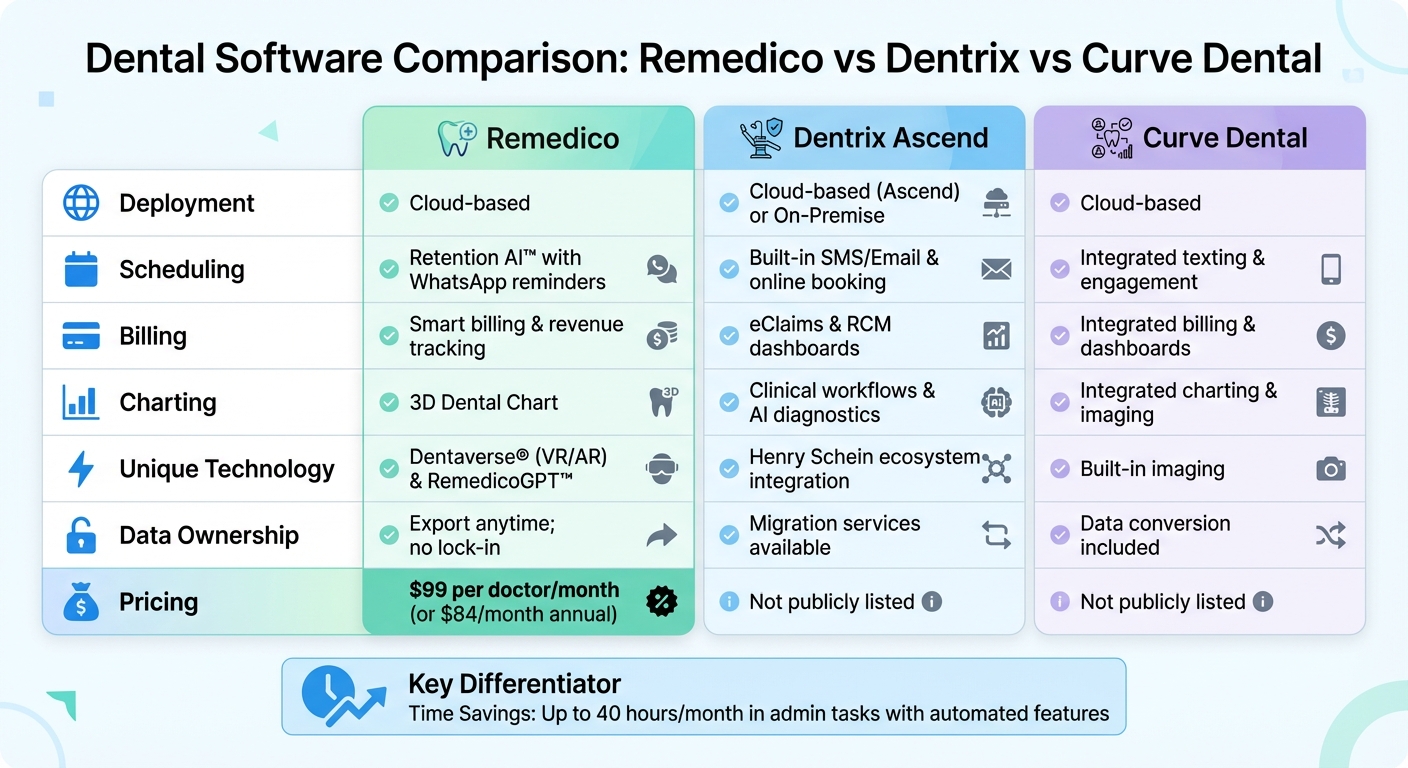
Comparing Dental Software: Remedico vs Dentrix vs Curve Dental
@figure {Dental Office Software Comparison: Remedico vs Dentrix vs Curve Dental Features and Pricing} :::
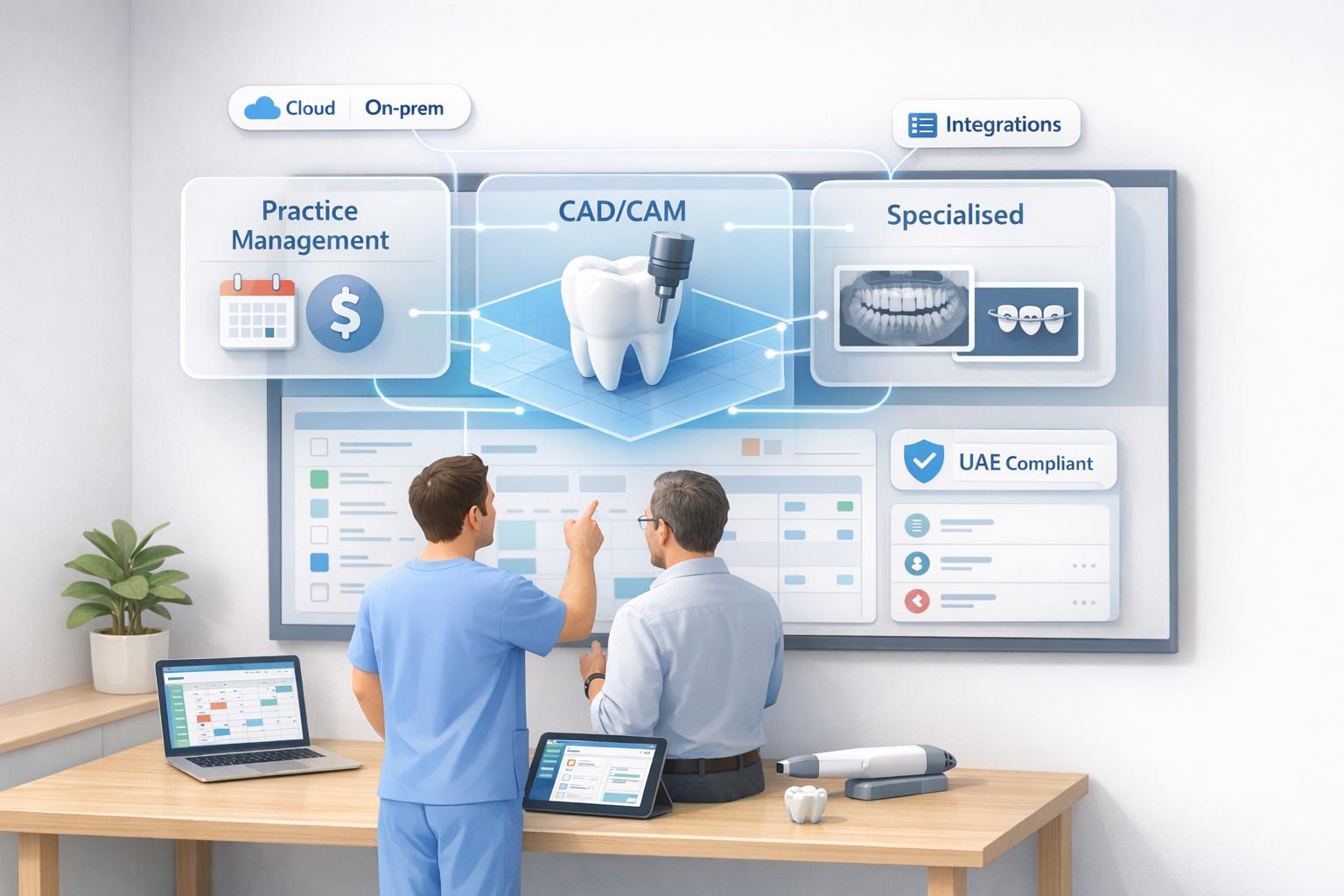
When it comes to dental office software, solutions like Remedico, Dentrix, and Curve Dental have become essential tools for streamlining scheduling, billing, and patient record management. However, these platforms differ significantly in their deployment options, pricing transparency, and integrated features.
Feature Comparison Table
Feature | Remedico | Dentrix (Ascend) | Curve Dental |
|---|---|---|---|
Deployment | Cloud-based | Cloud-based (Ascend) or On-Premise | Cloud-based |
Scheduling | Retention AI™ with WhatsApp reminders | Built-in SMS/Email & online booking | Integrated texting & engagement |
Billing | Smart billing & revenue tracking | eClaims & RCM dashboards | Integrated billing & dashboards |
Charting | 3D Dental Chart | Clinical workflows & AI diagnostics | Integrated charting & imaging |
Unique Tech | Dentaverse® (VR/AR) & RemedicoGPT™ | Henry Schein ecosystem integration | Built-in imaging |
Data Ownership | Export anytime; no lock-in | Migration services available | Data conversion included |
Pricing | $99 per doctor/month | Not publicly listed | Not publicly listed |
This table highlights the primary differences between these platforms. Below, we delve into why Remedico is particularly well-suited for modern dental clinics.
Dentrix provides flexibility with both on-premise and cloud-based options, catering to practices that value local data control or need scalable solutions for multiple locations. Curve Dental, on the other hand, emphasises simplicity with built-in imaging and an interface designed to reduce reliance on third-party tools. Meanwhile, Remedico sets itself apart with cutting-edge features like Dentaverse® for virtual reality (VR) patient education and RemedicoGPT™ for automated report generation. These tools help improve patient engagement while reducing administrative burdens [2].
Why Remedico Works Better for Modern Clinics
Remedico offers practical advantages that directly address common challenges faced by dental clinics, often including features that other platforms charge extra for.
For example, Dentaverse® enables clinics to present treatment plans in an immersive VR format, fostering greater trust and improving case acceptance rates. Additionally, Retention AI™ automates follow-ups and reminders through WhatsApp, email, and SMS, ensuring patients remain engaged and appointments are not missed [1].
At a cost of $99 per doctor per month - or $84 per month with an annual plan - Remedico includes electronic medical records (EMR), AI tools, and VR capabilities in one subscription. Unlike some competitors, there are no extra fees for setup, migration, or ongoing support [2]. Users have rated the platform 4.7 out of 5, frequently praising its intuitive design and responsive customer service team [2].
In one example from 2024, Dr. Jason Streeter transitioned from Dentrix to Curve Dental and managed to cut his total costs by more than 50% [8]. However, Remedico’s all-in-one approach eliminates the need for multiple tools or unclear pricing negotiations, offering a straightforward and modern solution for clinics looking to simplify operations.
3 Common Mistakes Clinics Make When Choosing Software
Selecting dental office software is no small task, and many clinics fall into common traps that lead to complications like integration headaches, accessibility limitations, and unused features. Remedico tackles these issues by ensuring seamless integration, offering cloud and mobile capabilities, and providing free training for staff.
Not Checking Integration with Existing Tools
A smooth workflow depends on how well your software integrates with essential tools like imaging systems, payment processors, and national health databases such as NABIDH or Riayati. Platforms with API-based integrations enable secure communication between systems, reducing the risk of database errors. To ensure compatibility, it’s a good idea to request a live demo. Pay close attention to how the software handles data transfer between your current tools and the new platform, and evaluate how many steps it takes to complete routine tasks like processing payments or updating patient records [9].
Ignoring accessibility can add another layer of complexity to your clinic’s operations.
Choosing Software Without Cloud or Mobile Access
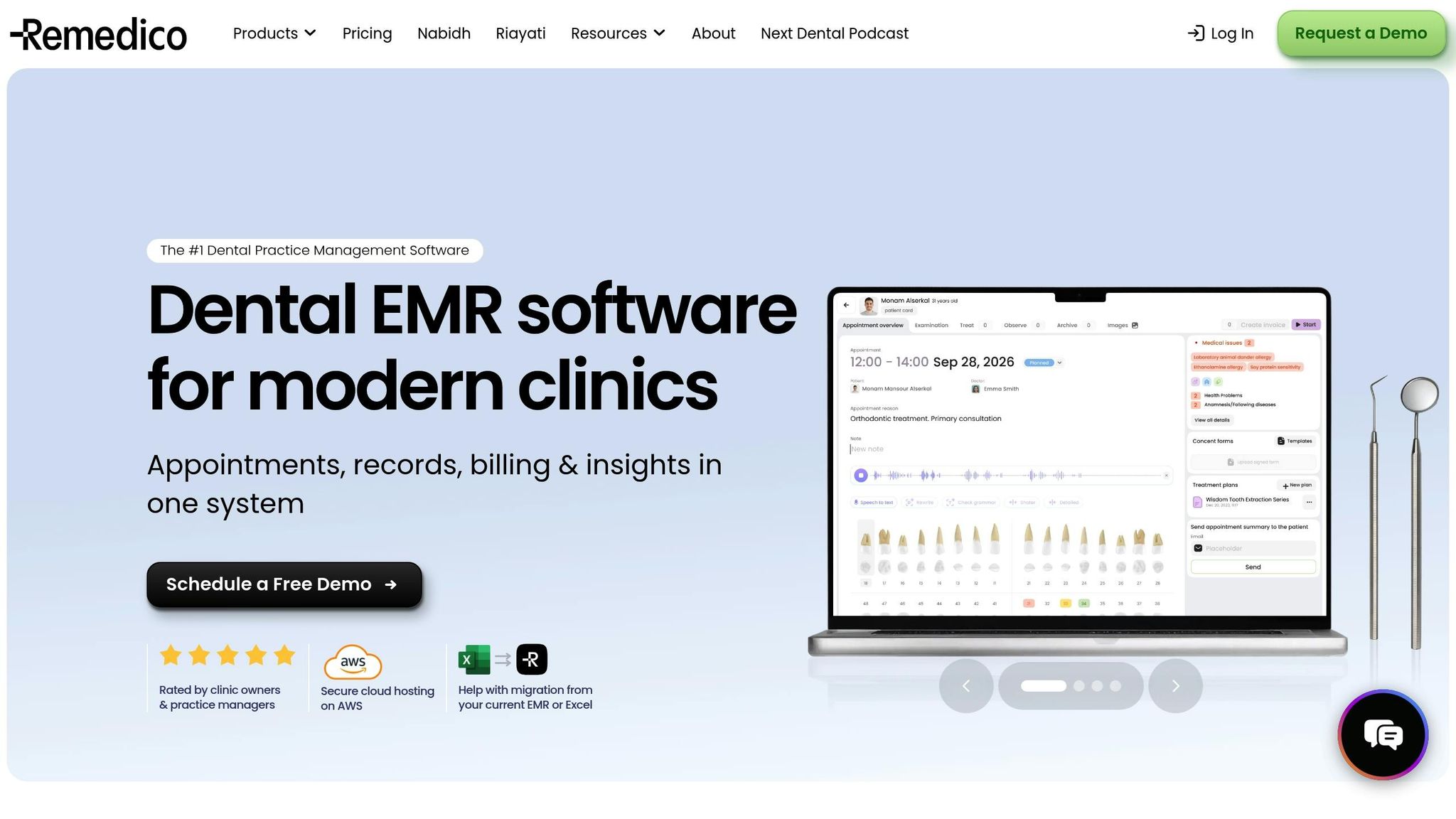
Older, on-premise systems limit flexibility, making it hard to manage schedules or billing when you’re away from the clinic. Cloud-based solutions, on the other hand, let you handle tasks like approving treatment plans or checking appointments from anywhere - even on mobile devices. For example, Remedico operates on secure AWS cloud hosting, allowing team members to access patient records on tablets like iPads during consultations or monitor daily revenue remotely [1].
But even the most advanced software won’t deliver results if your team isn’t equipped to use it.
Skipping Staff Training
No matter how advanced the software, it’s only as effective as the people using it. Without proper training, staff are more likely to make billing errors or enter duplicate data, which can disrupt daily operations. Clinics that prioritise training often experience smoother workflows and fewer mistakes.
Look for providers that include training and setup as part of their package. Remedico, for instance, offers free training alongside 24/7 priority support, ensuring your team has ongoing assistance. Clinics that invest in training report higher satisfaction, with users rating the platform an impressive 4.7 out of 5 [2].
Choosing the Right Dental Office Software for Your Clinic
When selecting dental office software, the key is to align its features with your clinic’s specific needs and challenges. The right choice should not only address your pain points but also save time and improve patient care.
Start by identifying the main hurdles your clinic faces. Are missed appointments a recurring issue? Do manual billing errors slow you down? Or perhaps patient records are scattered across multiple systems? Pinpointing these challenges will guide you toward software that can truly make a difference.
Focus on features that streamline admin tasks. For example:
- Smart scheduling tools with drag-and-drop functionality can save 6–8 hours a month by reducing unnecessary back-and-forth communication.
- Automated WhatsApp and email reminders can cut reception workload by 20–24 hours monthly.
- Digital consent forms that automatically save to patient records can eliminate 9–10 hours of manual filing each month.
Together, these tools can free up over 40 hours of administrative time every month, letting your team focus on patient care [1].
It’s crucial to test the software before committing. Request a live demo and walk through the entire patient journey - from booking to treatment planning and billing. Pay close attention to how intuitive the interface is. Does it require too many clicks to complete basic tasks? If it feels overly complicated, your staff may struggle to adopt it. Additionally, ensure the software integrates with your current systems and supports essential file formats like DICOM and STL for imaging and 3D files.
Data ownership and migration support are equally important. Your contract should guarantee you can export patient data anytime, without restrictions. Look for a provider that offers secure, free migration from your existing system - whether that’s an EMR or Excel spreadsheets - and ensures full backups to prevent data loss. For clinics in Dubai and across the UAE, verify that the software complies with local requirements such as NABIDH, DHA, or Riayati [2].
FAQs
How can dental office software help retain more patients?
Dental office software makes it easier to keep patients coming back by automating appointment reminders, cutting down no-shows by as much as 30%. With features like digital treatment plans and instant access to patient records, communication becomes clearer and more efficient, which helps build trust and boosts satisfaction. Plus, tools for personalised follow-ups and ongoing engagement make patients feel appreciated and well looked after. :::
Can dental software work with the tools I already use in my clinic?
Modern dental software, such as Remedico, is built to work seamlessly with the tools your clinic already relies on. It integrates with systems for billing, appointment scheduling, compliance, and more, making sure your operations stay connected and efficient. By reducing manual tasks and keeping data in sync, it streamlines processes without causing any interruptions to your existing workflow. :::
What factors should I consider when selecting dental office software for my clinic?
When choosing dental office software, it’s important to focus on factors that match your clinic’s needs and comply with local regulations. Compliance should be a top priority - make sure the software adheres to UAE standards like NABIDH or Riayati to meet legal requirements and ensure data security.
Look closely at the features the software offers. Tools like appointment scheduling with automated reminders, billing automation, patient record management, and electronic charting can save time and streamline your clinic’s daily operations. Also, prioritise ease of use - software that’s intuitive for your team and scalable as your clinic expands will make a big difference in the long run.
Think about integration capabilities too. For example, connecting with AI tools like RemedicoGPT or virtual engagement platforms can boost patient satisfaction and operational efficiency. Be sure to review the pricing structure carefully - watch for any hidden costs related to setup, training, or data migration. Lastly, choose software that provides dependable customer support, secure cloud storage, and remote management options to keep your clinic flexible and future-ready. :::