
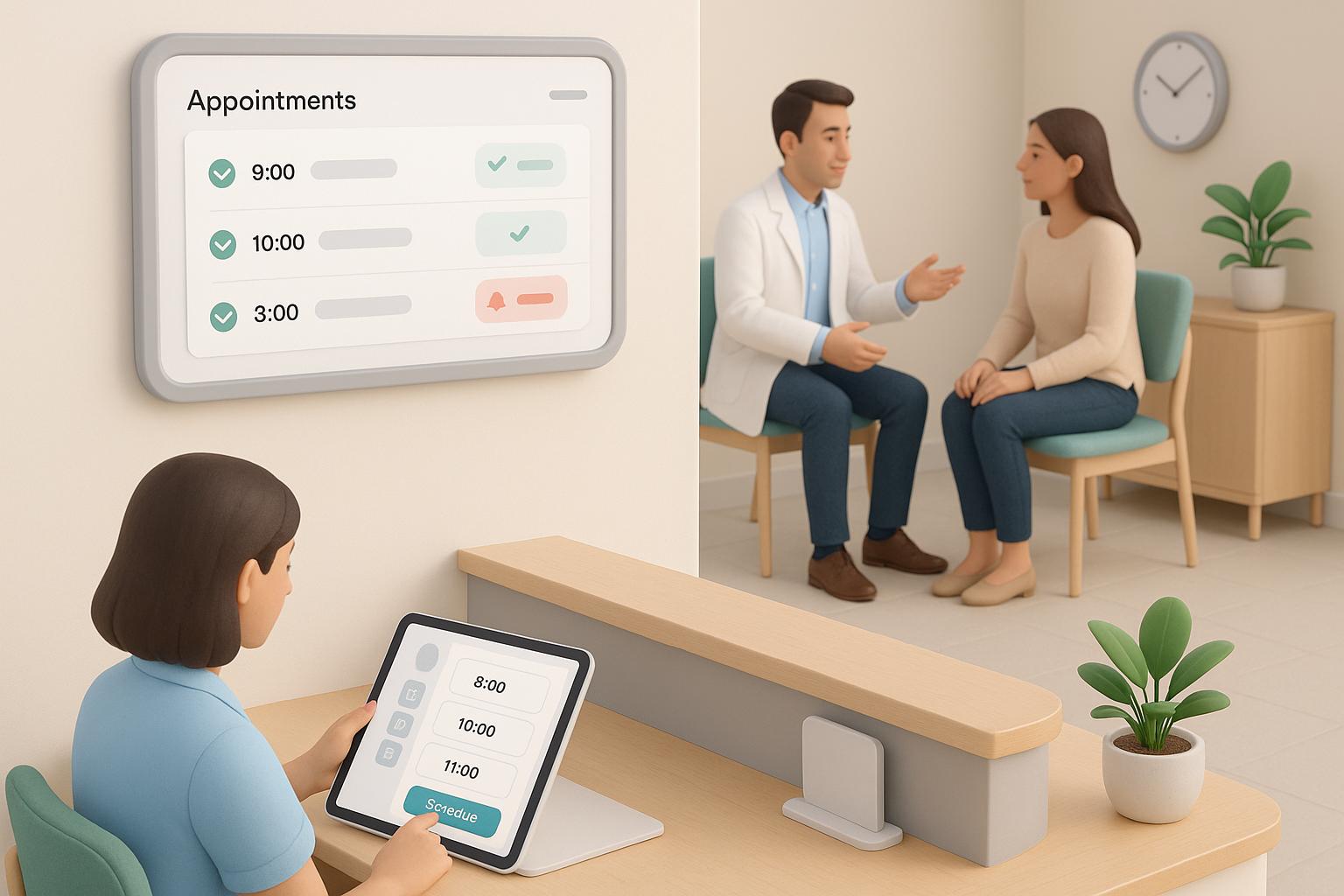
Using AI and CRM Tools to Streamline Dental Practice Systems
Running a dental clinic in the UAE or MENA region is challenging. Clinics often struggle with missed appointments, fragmented patient records, and overworked staff handling manual tasks like reminders and insurance claims. These inefficiencies lead to chaotic operations, frustrated patients, and compliance headaches.
The solution? AI and CRM tools. They automate scheduling, reminders, billing, and patient communication, while centralising records into a single platform. For UAE clinics, these systems also ensure compliance with NABIDH and Riayati standards, reducing audit stress.
Key benefits include:
- AI-powered scheduling: Predict no-shows, send reminders via WhatsApp/SMS, and manage appointments 24/7.
- Unified patient profiles: Track calls, visits, payments, and treatment history in one place.
- Multilingual communication: Support for Arabic, English, and other languages to serve diverse patient bases.
- Insurance automation: Faster claim approvals with AI-assisted coding and documentation.
- Retention tools: Automated follow-ups and recalls to reduce no-shows and increase case acceptance.
Platforms like Remedico combine AI and CRM into a single system tailored for the UAE, helping clinics save time, improve patient experiences, and boost revenue.
How AI can Simplify Dental Practice Management
What Are Dental Practice Systems and Why They Matter
Dental practice systems are the backbone of running a clinic efficiently. They combine software, workflows, and procedures to handle everything from scheduling appointments and managing patient records to processing insurance claims and tracking revenue. Think of them as the control centre for your practice - ensuring your team works seamlessly to schedule, treat, bill, and follow up with patients.
Modern systems integrate clinical, administrative, and financial tasks into one platform. This means data flows automatically between scheduling, charting, billing, and patient communication. For instance, the front desk can schedule an appointment and send automated reminders without re-entering patient details.
By cutting down on manual tasks, these systems allow staff to focus more on patient care. Dentists can instantly access treatment histories and imaging, while automated reminders - via SMS or WhatsApp - help reduce missed appointments.
In the UAE and MENA region, these systems also simplify compliance by maintaining structured records and clear audit trails, making regulatory processes smooth and stress-free.
Core Functions of Dental Practice Systems
A good dental practice system brings together several essential functions to enhance efficiency and patient care.
- Scheduling and Calendar Management: Online booking, appointment confirmations, recalls, and chair time management are centralised, helping reduce no-shows.
- Clinical Records and Imaging: Digital storage of medical histories, treatment notes, radiographs, consent forms, and treatment plans. Integration with tools like intraoral cameras and X-ray equipment ensures images are saved directly to patient files.
- Billing and Insurance: These systems handle fee schedules, generate invoices, submit insurance claims, and track payments. They also accommodate local insurance formats and fee structures.
- Patient Communication: Tools for sending SMS, email, or WhatsApp reminders about appointments, overdue visits, and post-treatment follow-ups. Features like bilingual templates cater to diverse patient needs.
- Reporting and Analytics: Dashboards provide insights into metrics such as no-show rates, treatment acceptance, and staff utilisation, helping clinics identify areas for improvement and make informed decisions.
For example, Remedico’s Smart Calendar simplifies appointment creation with one click, while Document Management 360 allows clinics to customise and streamline front-desk operations. Dr. Enas from Ras Al-Khaimah, UAE, transitioned from paper and spreadsheets to this system and found the “Observe reminders” feature significantly improved patient retention through automated follow-ups [1].
Benefits for UAE and MENA Clinics
These systems go beyond improving daily operations - they address specific challenges faced by clinics in the region.
- Reduced No-Shows: Automated reminders, personalised for each patient, minimise missed appointments.
- Streamlined Front-Desk Operations: Centralised records and billing reduce errors, cut wait times, and make admin tasks more efficient.
- Simplified Staff Training: Standardised workflows and templates make onboarding quicker and reduce mistakes.
- Audit Readiness: Time-stamped patient histories and billing trails ensure smooth inspections. Systems designed to meet NABIDH (Dubai Health Authority) and Riayati standards make compliance straightforward.
- Multi-Location Management: Unified records and reporting make it easier to coordinate clinics across different emirates.
- Support for Mixed Payment Models: Systems accommodate both self-pay and insurance-based payments, reflecting the diverse financial setup in UAE healthcare.
- Bilingual and Local Adaptability: Templates in multiple languages and scheduling features that consider prayer times and extended evening hours cater to the region’s diverse population.
“My daily workflow has become a breeze! As a tech-savvy dentist who loves Apple products, I always struggled with the dental software on the market. Finding Remedico was life-changing. It’s unlike anything else I’ve used. Definitely highly recommended!” Dr. Ahmad Khuzae, Dubai, UAE [1]
By tracking metrics like no-show rates, call response times, accounts receivable days, and completed daily appointments, clinics can measure the impact of switching to an integrated system.
Remedico offers a platform designed specifically for UAE and MENA clinics. Its features, such as RemedicoGPT™ (an AI assistant for reports and forms), Retention AI™ (automated reminders and follow-ups), and Patient Flow™ (monitoring the patient journey), reduce admin work while enhancing patient satisfaction. The system is compliant with NABIDH and Riayati standards, supports AED billing, and even includes 1,000 free WhatsApp reminders per month to keep patients engaged.
How AI and CRM Tools Change Dental Practice Management
AI and CRM tools transform outdated record systems into dynamic solutions that simplify tasks, address potential issues, and keep patients engaged. These tools take over repetitive tasks, like sending reminders and managing recalls, allowing staff to focus on more meaningful work. The result? Smoother clinic operations, higher appointment bookings, and a better patient experience from the first interaction to long-term follow-ups. This shift paves the way for integrated systems that connect every stage of patient care seamlessly.
What AI Does for Dental Clinics
AI takes on time-heavy administrative tasks, streamlining operations in ways that save both time and effort. For instance, smart scheduling and no-show prediction tools analyse patient behaviour to suggest ideal appointment times and send reminders via SMS, WhatsApp, or email. Studies show these features can reduce no-show rates by up to 30% [4][7].
AI also simplifies charting and documentation by generating clinical notes through templates or voice input. This not only saves several minutes per patient but also ensures consistent records across providers. For multi-doctor clinics or larger groups with multiple locations, this consistency makes audits and handovers far more manageable [3][5].
Insurance processing, which often feels like a bottleneck, becomes quicker with AI. By automatically identifying radiograph findings and filling in claim codes, AI speeds up approvals and reduces claim denials. In the UAE, where many patients rely on insurance and clinics deal with multiple payers, this efficiency can significantly improve cash flow [3][4][16].
AI’s capabilities extend to image analysis as well. By overlaying findings like caries or bone loss directly on radiographs, it provides dentists with a visual second opinion. This feature not only enhances diagnostic accuracy but also helps patients better understand their treatment needs, often leading to higher case acceptance. One national dental organisation even reported a “significant drop in diagnostic variability” after adopting AI across its clinics [10][12][17].
Beyond clinical tasks, AI-powered dashboards provide actionable insights. They can identify issues like long wait times, low case acceptance, or high no-show rates, enabling clinic owners to adjust staffing or hours to meet patient demand, especially during busy periods like evenings and weekends [2][4][6].
Tools like Remedico’s RemedicoGPT™ make AI even more accessible by handling tasks like retrieving clinical documents, rescheduling appointments, or generating accounting reports - all in seconds. This reduces administrative burdens and allows staff to focus more on patient care [1].
How CRM Tools Improve Patient Management
While AI handles the backend, CRM tools enhance the patient-facing side of operations. A dental CRM system consolidates every interaction - whether it’s a phone call, WhatsApp message, email, or front-desk visit - into a single timeline. This gives staff a complete view of a patient’s history, making every conversation more personalised. For example, a receptionist can instantly see a patient’s treatment stage, upcoming recalls, and preferred contact method [2][16].
CRM systems also automate communication throughout the patient journey. When a patient submits a web form or leaves a missed call, the CRM can send an immediate WhatsApp or SMS reply with clinic details and a booking link. If there’s no response, it triggers a follow-up reminder [2][8]. Before appointments, automated messages in Arabic or English allow for one-tap confirmations or rescheduling. After treatment, patients receive care instructions, feedback links, and reminders for follow-ups like suture removal or hygiene visits [2].
For long-term retention, CRM tools flag inactive patients - those who haven’t visited in over a year - and send win-back messages. They also handle recall reminders for six-month check-ups, birthday greetings, and targeted offers like whitening or orthodontic consultations. Dashboards track metrics such as active patients and reactivation rates, helping clinic owners measure the success of these campaigns [2][4].
Remedico’s Retention Booster AI™ takes this a step further by analysing patient data to craft effective communication strategies. With features like 1,000 free WhatsApp reminders per month, it helps clinics stay connected with patients without adding extra costs.
Combining AI and CRM for Better Results
The real magic happens when AI and CRM tools work together. AI can score leads and prioritise actions like calls or messages [2][4]. Predictive models flag patients likely to skip follow-ups, prompting additional reminders or personal outreach [2][4].
AI’s image analysis can also integrate with CRM records, offering visual aids that improve case acceptance. After treatment, AI schedules recalls based on the procedure type and healing time, while the CRM manages corresponding messages and tracks responses. Over time, AI analyses CRM data to identify the most effective campaigns and channels, guiding marketing and pricing strategies [2][4].
Even phone systems get smarter with AI. They can listen to calls, identify missed booking opportunities, and flag dissatisfied patients. These systems also display patient records during calls, classify call types (like new patient, recall, or emergency), and track conversion rates to evaluate front-desk performance and marketing ROI [9][18].
This integrated approach supports bilingual communication (Arabic and English), respects local customs like prayer and fasting times, and works across popular channels like WhatsApp, SMS, and email. By merging AI and CRM, dental practices can unify their systems, offering a cohesive experience for both staff and patients.
Remedico’s platform combines AI and CRM into one seamless system. Its Patient Flow™ feature guides patients from their first contact, captured via the Smart Calendar, through treatment management in the Treatment Funnel™, and into post-treatment follow-ups with tools like Medicine Prescriptions and Observe reminders. This all-in-one setup ensures staff have complete context, making patients feel genuinely cared for.
“My daily workflow has become a breeze! As a tech-savvy dentist who loves Apple products, I always struggled with the dental software on the market. Finding Remedico was life changing. It’s unlike anything else I’ve used. Definitely highly recommended!” - Dr. Ahmad Khuzae, Dubai, UAE [1]
Cloud-based platforms like CareStack and Adit also show how combining AI automation with communication tools can create smoother patient journeys, reduce manual work, and make revenue more predictable [9][18].
Key Features of a Dental Practice Management System
A dental practice management system should go beyond just storing patient names and appointment details. The ideal platform integrates scheduling, clinical tasks, billing, and patient communication, streamlining operations so your team can focus more on patient care. For clinics in the UAE and MENA region, selecting the right system involves considering three key areas: operational essentials to keep the clinic running smoothly, AI tools to reduce repetitive tasks, and CRM features to enhance patient retention.
Core Operational Features
Smart scheduling is the backbone of any dental practice. A robust system should manage multiple chairs and providers, using a colour-coded calendar to show availability at a glance. It should recommend appointment slots based on the length of procedures and provider expertise, helping to minimise downtime and prevent overtime. Automated reminders can significantly reduce no-show rates, with AI-driven practices often seeing better chair utilisation rates [4][7]. The scheduling tool should also handle family bookings, recurring orthodontic visits, urgent cases, and waitlist management. For clinics in the UAE, support for Arabic and English messaging and flexibility for local working hours, such as split shifts or Ramadan timings, is essential.
Digital patient records replace traditional paper files with easily searchable profiles. Each patient should have a unique ID tied to their Emirates ID or passport, alongside:
- Medical history and consent forms
- Clinical notes and treatment plans
- Radiographs and other supporting images
Role-based access ensures that only authorised staff can view or edit sensitive information, helping clinics comply with NABIDH in Dubai and GDPR in the EU [6][11]. Pre-designed templates for clinical notes and treatment plans standardise documentation, making audits simpler and ensuring smooth handovers between providers.
Automated billing and insurance handling simplify financial workflows and speed up cash flow. The system should link completed procedures to invoices in AED, apply VAT where needed, and generate insurance claims pre-filled with the necessary codes, tooth numbers, and images [3][4]. AI can further streamline this by annotating radiographs and suggesting codes, reducing claim denials and speeding up approvals.
Performance dashboards provide clinic owners with key metrics at a glance, such as daily revenue, collections, chair utilisation, new patient numbers, cancellations, and overdue recalls. These dashboards can also highlight individual provider performance, making it easier to identify training opportunities or top-performing team members [10][12][14].
Remedico’s Smart Calendar simplifies appointment scheduling, sends automated reminders, and integrates billing in one place. Meanwhile, the Owner’s Dashboard offers real-time insights into revenue, visits, and provider performance, ensuring you’re always in control of your clinic’s progress.
Next, we’ll explore how AI takes these core features to the next level by turning data into actionable insights.
AI-Powered Features
AI enhances operational efficiency by transforming routine data into actionable insights. For instance, practice analytics can identify your most profitable procedures, pinpoint underperforming time slots, and flag providers with higher re-treatment rates. This data helps you make informed decisions about staffing, pricing, and marketing [3][4]. If, for example, Friday afternoons consistently show low bookings, you could adjust your operating hours or launch targeted promotions.
No-show prediction tools analyse patient history and behaviour to identify high-risk appointments. The system can then send extra confirmations, request pre-payments, or fill these slots with waitlisted patients. Clinics using AI scheduling often report better chair utilisation and fewer empty slots [4][7].
AI-assisted claims and documentation streamline insurance submissions by analysing radiographs and pre-filling codes, speeding up approvals and reducing errors [3][4]. AI can also generate clinical notes using templates or voice input, saving time and ensuring consistency across providers [3][5].
Inventory monitoring uses AI to track material usage, alerting staff when it’s time to reorder and helping avoid stock shortages or expired materials [3]. It can also suggest bulk orders for frequently used items, helping clinics save on costs.
Automated patient recalls and segmentation analyse visit history, treatment types, and past communication patterns to create personalised recall schedules. For example, the system might prioritise implant patients overdue for a review or send cleaning reminders to those who haven’t visited in six months [2][11][7]. Segmentation can also group patients by factors like treatment value, language, or location, enabling targeted campaigns such as whitening promotions before Eid or post-summer check-ups.
CareStack’s latest features highlight AI-driven automation for scheduling, billing, and revenue management, while Overjet’s AI offers real-time radiographic analysis. This ensures consistent, AI-backed diagnostics across providers, reducing variability and simplifying training [9][10].
According to an Overjet Patient Survey, 85% of patients are more likely to agree to treatment when they can visually understand their condition [13]. Clinics using Overjet’s AI for patient education report a 27% increase in case acceptance rates [13].
Remedico’s RemedicoGPT™ acts as an AI-powered assistant, handling tasks like retrieving clinical documents, rescheduling appointments, generating reports, and filling forms in seconds [1]. This reduces administrative workloads, allowing staff to focus more on patient care.
While AI optimises operations, CRM tools ensure a seamless patient experience from start to finish.
CRM Features That Matter
CRM tools manage the entire patient journey, from the first enquiry to building long-term loyalty. Lead capture gathers enquiries from various channels - phone calls, website forms, WhatsApp, and social media ads - into a unified list. By tagging sources, you can identify which channels convert the most leads into appointments [2]. A pipeline view tracks each stage, such as New Lead → Contacted → Consultation Booked → Treatment Accepted, and automates follow-ups, like sending a WhatsApp message if a call goes unanswered.
Communication tracking keeps a log of all interactions within the patient profile. This ensures any team member can pick up the conversation without requiring the patient to repeat themselves [2][8]. Staff can easily view details like treatment stage, upcoming recalls, and preferred contact methods, enhancing personalised care.
Appointment follow-ups and post-treatment communication should be tailored to the type of visit. For example, after surgery, patients might receive a same-day SMS with care instructions and a follow-up check-in after 24 hours. For routine cleanings, a simple “Thank you, here’s your next due date” message with an online booking link works well [2][11][8].
Marketing campaign management within the CRM can create segmented campaigns for specific groups, such as lapsed orthodontic patients or VIP offers. These campaigns should track open and response rates and link directly to booked treatments to measure ROI [2]. For UAE clinics, bilingual templates in Arabic and English are crucial, along with compliance with marketing consent regulations.
AI phone systems or virtual receptionists act as 24/7 assistants, handling calls, scheduling appointments, taking messages, and answering FAQs without leaving patients on hold [7][8]. These systems should integrate with the clinic’s calendar and patient records, supporting multiple languages.
Remedico’s Retention Booster AI™ uses patient data to craft effective communication strategies, including 1,000 free WhatsApp reminders per month [1]. The Patient Flow™ feature guides patients from their first contact through treatment and follow-ups, ensuring a seamless experience. This all-in-one approach gives staff the tools they need to provide attentive, personalised care.
sbb-itb-d8b42ea
How to Choose the Right Dental Practice System
When selecting a dental practice system, focus on addressing your clinic’s specific challenges rather than being swayed by an extensive feature list. Many clinic owners across the UAE, MENA, and EU often rush into product demos without first identifying their actual needs.
Identifying Gaps in Your Current Operations
Start by pinpointing areas where time and money are being wasted. For instance, high no-show rates and frequent late cancellations might indicate inefficiencies in your booking and reminder processes. If your front desk team spends hours manually calling patients to confirm appointments, it’s a sign that your current system isn’t optimised for efficient scheduling [4][7].
Billing workflows also deserve scrutiny. Look for recurring issues like invoice errors, slow insurance claim approvals, or repetitive data entry - these often highlight a lack of back-office automation [6][4].
Another common problem is fragmented patient data. If your team has to sift through paper forms, WhatsApp chats, Excel sheets, and outdated software just to access a patient’s full history, it’s clear you need a unified system. To better understand these inefficiencies, ask your staff to maintain a one-week “friction log” to document repetitive or error-prone tasks. These patterns will help define your clinic’s most pressing needs [2][3].
Track these metrics over two weeks to identify operational weak spots:
- Daily missed calls and unanswered WhatsApp messages
- Time taken to convert new leads into booked appointments
- Percentage of leads that don’t result in appointments
- Hours spent on manual reminder calls and messages
- Rejected insurance claims on first submission
- Patient wait times from check-in to treatment start
Poor lead follow-up often leads to lost revenue. If you’re running Instagram ads or Google listings but aren’t tracking which channels drive the most conversions - or if new enquiries sit unanswered for days - consider a system with AI-driven CRM capabilities [15][2].
For clinics in the UAE and EU, compliance is just as critical as efficiency. Issues with patient consent forms, access controls, or audit trails for health data may indicate that your current system isn’t aligned with NABIDH or GDPR standards [6].
Once you’ve identified these gaps, the next step is to evaluate AI and CRM features that can directly address these issues.
Evaluating AI and CRM Capabilities
Use the gaps you’ve identified to set measurable goals for your new system. For example, aim to “reduce no-shows by 30% in three months” or “cut claim rejections by half.” These targets can guide your search for features like automated multi-channel reminders or AI-assisted claims coding [4][7][6].
Categorise your requirements into must-have and nice-to-have features. Prioritise functions tied to revenue, such as improving chair utilisation, reducing claim rejections, and enhancing lead conversion. Legal safeguards like data protection, audit logs, and consent tracking should also be non-negotiable. On the other hand, aesthetic features like customisable dashboard colours can fall into the “nice-to-have” category [4][6].
Key AI capabilities to consider:
- Intelligent appointment booking that predicts no-shows, fills schedule gaps, and balances workloads to maximise chair utilisation [4][7].
- AI modules for tasks like insurance verification, radiograph analysis, and scheduling optimisation - already used by 18% of dental professionals [20].
- AI receptionists capable of handling bookings, FAQs, and follow-ups 24/7, which can improve lead conversion from social media and search ads [15][2][8].
- Predictive analytics to identify bottlenecks, set realistic revenue goals, and optimise provider schedules [4][2].
- Patient record analysis to flag potential treatment needs, standardise case presentations, and improve clinical outcomes [3][11].
According to a 2024 global survey by Dentsply Sirona, over 60% of dentists believe AI will play a major role in diagnosis within the next five years [21].
For CRM capabilities, look for:
- Centralised patient interaction records, covering calls, WhatsApp, SMS, and email, for a complete conversation history [15][2].
- Automated workflows for new leads, pre-appointment education, recall reminders, and reactivating inactive patients, with templates tailored for both Arabic and English [15][2].
- Strong segmentation tools to tag patients by treatment interest, activity status, and behaviour, enabling targeted campaigns for services like implants or orthodontics [15][2].
- AI-driven lead scoring to categorise prospects (e.g., “Appointment Set”, “Undecided”) and determine when human follow-ups are necessary [15].
Important questions to ask vendors:
- Where is patient data stored, and in which region or data centre?
- How is data encrypted during transmission and storage?
- Are access logs role-based, and how are they managed? [6][11]
For AI features, inquire about training data, retention policies for conversation logs, and how patients can request data access or deletion [11]. Clinics in the EU should ensure GDPR compliance, focusing on data minimisation and consent management, while UAE clinics should verify compatibility with local health authority reporting requirements [6][11]. Also, ask for written details on incident response plans, backup policies, and system uptime guarantees [6].
Finally, automated communications should clearly identify your clinic and offer patients an easy way to update their preferences, reducing legal risks associated with direct marketing [2][6].
All-in-One Systems vs. Separate Tools
This decision will significantly impact your clinic’s workflow. All-in-one systems provide a unified platform with a single login, centralising patient records, appointments, billing, and communications. This eliminates the need for manual data syncing or exports [2][3][6].
While separate tools may seem more affordable or flexible at first, they can lead to hidden costs like extra staff time, duplicate data entry, and maintenance challenges - especially when APIs change or vendors update their software [2][3]. Factor in not just the subscription fees but also the time spent reconciling data and troubleshooting integration issues [2][3].
All-in-one platforms often include built-in AI and CRM features that seamlessly integrate with your clinical schedule and billing processes. This ensures smooth operations without the need for additional middleware or custom setups [3][4]. On the other hand, standalone tools may offer advanced features in specific areas, such as radiographic AI or detailed marketing analytics, but they require careful integration and can create data silos if not managed properly [12][22].
When separate tools might be better:
- Large group practices with dedicated IT teams can manage integrations and benefit from specialised tools.
- Clinics with effective legacy systems can extend their functionality with targeted AI modules for imaging or communication [12][22].
When all-in-one platforms are ideal:
- Independent clinics in the UAE, MENA, and EU often benefit from reduced complexity with fewer systems to manage [2][4].
- Growing clinics should look for platforms that support multiple locations and specialties under one account while offering detailed performance reporting [4].
- If you’re expanding services like orthodontics or facial aesthetics, ensure the system can handle diverse workflows and pricing without extra add-ons [3][4].
- Clinics relying heavily on digital marketing and WhatsApp should prioritise platforms with integrated AI reception, CRM, and patient management tools to avoid needing separate solutions [15][2][8].
Evaluate systems based on:
- Core functions (scheduling, billing, imaging)
- AI capabilities (automation, analytics, clinical support)
- CRM features (lead management, segmentation, communication)
- Compliance (data security, audit trails, consent management)
- Support quality (response time, training resources, local language)
- Total cost (subscription, implementation, and ongoing maintenance)
Real-World Example: How AI and CRM Automate Clinic Operations
Creating a Dental Operations Manual
A dental operations manual is the backbone of a well-organised clinic, especially when integrating AI and CRM tools. This manual outlines every task in your practice, from initial patient inquiries to follow-up reminders months after their visit. It ensures consistency and efficiency across all staff.
Typically, these manuals cover processes like patient intake, scheduling, clinical documentation, billing workflows, recall systems, and reporting routines[10][12][14]. Without it, clinics often rely on “tribal knowledge” - where tasks are performed based on individual memory or personal habits. This can lead to mistakes, missed appointments, and lost revenue.
The manual should clearly distinguish between tasks handled manually by staff and those automated by AI or CRM systems. For instance, if a patient misses a call, the manual might state: “System automatically texts the patient and creates a follow-up task for the front desk.” Similarly, if a patient books an implant consultation, it could specify: “AI sends pre-visit instructions and a link to a medical history form”[19][12].
To make it easier to follow, divide the manual into sections for each major process. For patient intake, include details like using online forms that sync with your practice management system, verifying insurance, and preparing charts before appointments. Under scheduling, outline chair allocation rules, appointment durations by procedure, and how cancellations or waitlists are handled[9][19][20].
For billing and insurance, describe steps such as pre-authorisation, claim submission timelines, handling rejections, and posting payments. In the recall and reactivation section, define recall intervals (e.g., six months for hygiene check-ups), set outreach schedules (e.g., three reminders over two weeks), and specify communication methods like SMS, WhatsApp, or email[19][10][12].
Your manual should also include communication standards, such as templates for SMS messages, email flows, chatbot responses, and phone scripts. Finally, document your reporting cadence, listing dashboards to review weekly, key metrics like production and no-show rates, and assigning responsibility for these reviews[10][12][14].
Once your manual is complete, the next step is to turn these processes into automated workflows.
Converting Manual Tasks into Automated Workflows
With the operations manual as a guide, transitioning to automated workflows can streamline your clinic’s daily tasks. Start with high-frequency tasks like recalls, insurance verifications, and clinical note-taking, as these offer the quickest improvements[19][20][10].
For each process, identify what can be automated. Take appointment scheduling as an example. Traditionally, staff handle calls, estimate appointment times, and manage cancellations manually. AI can now predict no-shows, automatically fill gaps using a waitlist, and let chatbots handle booking and rescheduling 24/7[9][19][20].
Patient intake can shift from paper forms to smart online forms that directly update your system. AI can flag missing information, verify insurance, and prepare patient charts ahead of visits[19][12][14].
Clinical notes can be simplified with AI-powered tools that use templates, extract data from images, and pre-fill documentation. For instance, during the 2025 Chicago Midwinter Meeting, CareStack showcased how AI-assisted clinical workflows reduce documentation time without sacrificing accuracy[9][10][12].
For billing and insurance, AI can suggest codes based on clinical data, verify coverage, and highlight under-coded or missed charges. It can even analyse radiographic images to auto-code claims, speeding up approvals and minimising denials[19][10][12].
Recall and reactivation processes benefit from CRM-driven sequences that automatically reach out to overdue patients using predefined rules and previous behaviour patterns[19][12].
Reporting evolves from manual compilation to real-time dashboards offering insights into production, case acceptance, and patient retention trends.
“My daily workflow has become a breeze! As a tech-savvy dentist who loves Apple products, I always struggled with the dental software on the market. Finding Remedico was life changing. It’s unlike anything else I’ve used. Definitely highly recommended!” Dr. Ahmad Khuzae, Dubai, UAE [1]
AI chatbots can handle FAQs, book appointments, send instructions, and process cancellations round the clock. Advanced systems can even route phone calls to the right staff member while displaying the patient’s chart, reducing call times and errors[19][12].
A national dental organisation using Overjet reported fewer discrepancies in diagnoses across providers after implementing AI. This led to improved treatment planning, better predictability, and increased revenue, proving how AI can bring consistency to large-scale operations[10].
By converting standard procedures into automated triggers, clinics can achieve greater efficiency. For example, when a patient books an implant consultation, the system can automatically send pre-visit instructions and a medical history form link. Similarly, if a patient is overdue for hygiene care, an automated reactivation sequence can be triggered. Missed calls, rescheduling, and recalls can all be managed seamlessly through automation[19][12].
Implement AI-powered analytics dashboards to track performance metrics like production, unfilled chair time, no-show rates, and recall reactivation rates. These insights enable clinic owners to tweak workflows and improve outcomes[19][10][12].
Remedico’s tools, such as Patient Flow™, guide patients through every step of the intake process, ensuring consistency. Treatment Funnel™ supports doctors in following treatment protocols, documenting cases, and maintaining long-term patient care. Additionally, Smart Appointments™ simplify scheduling with one-click appointment creation and streamlined calendar management, reducing errors and saving time[1].
Key Takeaways for Dental Clinic Owners
Integrating AI and CRM tools into your dental practice can transform how your clinic operates. These systems not only predict patient no-shows and automate reminders but also help convert unused time into revenue. For instance, clinics that use AI-powered patient education tools often see a 27% increase in case acceptance rates. Why? Because 85% of patients are more likely to agree to treatment when they can see their conditions clearly through AI-enhanced visuals like annotated images[13].
Beyond patient education, these tools streamline administrative tasks. They automate scheduling, follow-ups, billing, and even basic queries, freeing up your front-desk team to focus on patient care instead of repetitive tasks like recall reminders or note-taking[2][3][6][8]. AI assistants can handle bookings, rescheduling, and reminders via SMS, WhatsApp, and email, significantly reducing call volumes and manual communication efforts[2][7][8].
AI isn’t just about efficiency - it also builds trust. By offering detailed visuals, comprehensive notes, and clear follow-up explanations, AI improves communication, helping patients better understand their treatment needs[13].
When it comes to compliance, AI and CRM systems centralise record-keeping, log communications, and manage data access. This ensures you meet regulatory standards in regions like the UAE and EU. Automated logs provide a clear audit trail of who accessed records and when, making it easier to address inquiries from regulators or insurers[6][11]. Consistent digital documentation of notes, radiographs, and other records also strengthens insurance claims and medico-legal protection[3][11].
Adopting AI and CRM tools can yield noticeable results within three to six months. Clinics often experience fewer missed appointments and cancellations due to smarter reminder systems[4][7]. Doctors benefit from faster, more accurate documentation, with AI assisting in note-taking, image analysis, and insurance narratives[3][5][11]. Meanwhile, clinic owners gain access to insightful dashboards that track chair utilisation, provider productivity, and case acceptance rates - helping make more informed financial decisions[4].
Using an all-in-one platform like Remedico ensures these benefits without disrupting your current workflows. Such platforms combine AI features like smart scheduling and recall automation with robust CRM tools for patient segmentation, communication tracking, and targeted campaigns. Everything ties seamlessly into appointment management and clinic operations[2][7][8].
For clinics in the UAE and MENA region, it’s crucial to choose a system tailored to local needs. This includes compliance with regional regulations, support for popular communication channels like WhatsApp and SMS, and integration with local insurance processes[11][12][22]. Remedico’s tools, such as Patient Flow™ for intake management, Treatment Funnel™ for protocol adherence, and Smart Appointments™ for easy scheduling, are designed to address these specific requirements. These features not only meet regulatory standards but also eliminate inefficiencies that can arise from ignoring such technologies.
Failing to adopt AI and CRM systems puts clinics at a disadvantage. Without these tools, administrative costs climb, patient communication weakens, and empty chair time increases. Over time, this leads to slower response times, missed calls, and frustrated patients who expect 24/7 digital access. Clinics that lag behind in adopting these technologies risk falling further behind competitors who embrace them, missing out on the benefits of fewer no-shows and stronger patient engagement[2][4].
FAQs
How can AI and CRM tools help reduce missed appointments at dental clinics?
AI-powered CRM tools help clinics cut down on missed appointments by automating key tasks like reminders, follow-ups, and appointment confirmations through SMS or email. Beyond that, these tools can analyse patient behaviour to spot trends and send tailored re-engagement messages, prompting patients to reschedule any missed visits.
Features like AI-driven communication systems take patient interactions to the next level. These tools simplify the process for patients to remember and stick to their appointments, which in turn increases attendance rates and improves patient satisfaction. :::
What features should a dental practice management system include to comply with UAE regulations like NABIDH and Riayati?
To align with UAE regulations like NABIDH and Riayati, a dental practice management system needs to prioritise secure handling of patient data, treatment records, and financial reports. This includes strict adherence to data protection standards, ensuring the safety of personal identifiable information (PII), and enabling efficient electronic documentation.
A key requirement is the integration of APIs for secure data exchange with national health platforms, which ensures compliance with NABIDH and Riayati mandates. The system should also provide robust electronic health records (EHR), simplify regulatory reporting, and streamline documentation workflows.
Additional must-have features include appointment scheduling, digital billing, and secure communication with patients. Together, these functionalities not only support regulatory compliance but also enhance operational efficiency for dental practices in the UAE. :::
How do AI and CRM tools help improve patient communication and retention in dental clinics?
AI and CRM tools are transforming how clinics connect with patients by streamlining essential tasks like sending personalised appointment reminders, managing follow-ups, and sharing treatment updates. With AI’s ability to generate quick and accurate responses, administrative workloads shrink, ensuring patients receive clear and timely communication without delays.
CRM tools go a step further by keeping track of patient history, preferences, and engagement patterns. This enables clinics to offer a more tailored and meaningful experience. The result? Happier patients, fewer missed appointments, and stronger long-term loyalty. :::


