Dental WhatsApp Appointment Reminders UK: How Clinics Use Them
Missed dental appointments cost UK practices thousands every year, but WhatsApp reminders are helping reduce no-shows. Studies show these reminders cut missed appointments by 42.8%, outperforming emails and phone calls. Patients are more likely to read WhatsApp messages, and the system allows for quick responses like “YES” to confirm or “NO” to cancel, which automatically updates practice schedules.
Key benefits include:
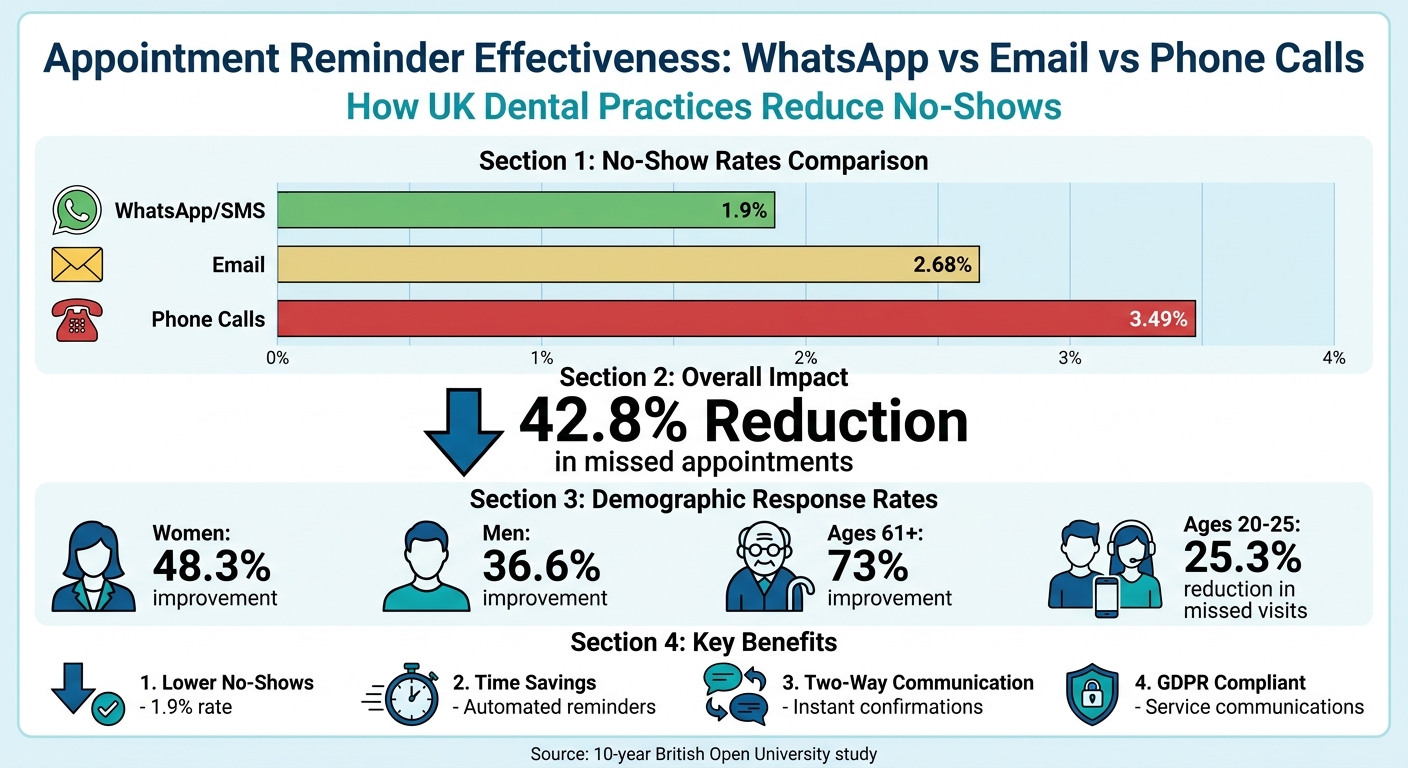
- Lower no-show rates: WhatsApp reminders reduce missed appointments to 1.9%, compared to 2.68% for emails and 3.49% for phone calls.
- Improved efficiency: Automated reminders save reception staff time by reducing manual calls.
- Better communication: Patients can easily confirm, reschedule, or cancel appointments.
- Compliance with GDPR: Reminders are classified as service communications, avoiding stricter marketing rules.
Practices using tools like Remedico can integrate WhatsApp with their scheduling software to automate reminders, personalise messages, and track patient responses. This approach enhances patient engagement while cutting administrative workload.
@figure {WhatsApp vs Email vs Phone Call Appointment Reminder Effectiveness for UK Dental Practices} :::
How to Automate Appointment Scheduling for Dental Clinics Using WhatsApp
sbb-itb-d8b42ea
What Are Dental WhatsApp Appointment Reminders in the UK and How Do They Work
Dental WhatsApp appointment reminders are automated messages sent via WhatsApp to patients, helping them stay on top of their dental appointments. These messages can confirm upcoming visits, provide post-treatment instructions, or remind patients about hygiene recalls [1]. The system integrates with your dental practice software, pulling patient details and appointment schedules to send messages automatically - often at intervals like 72 hours and 24 hours before the appointment [2].
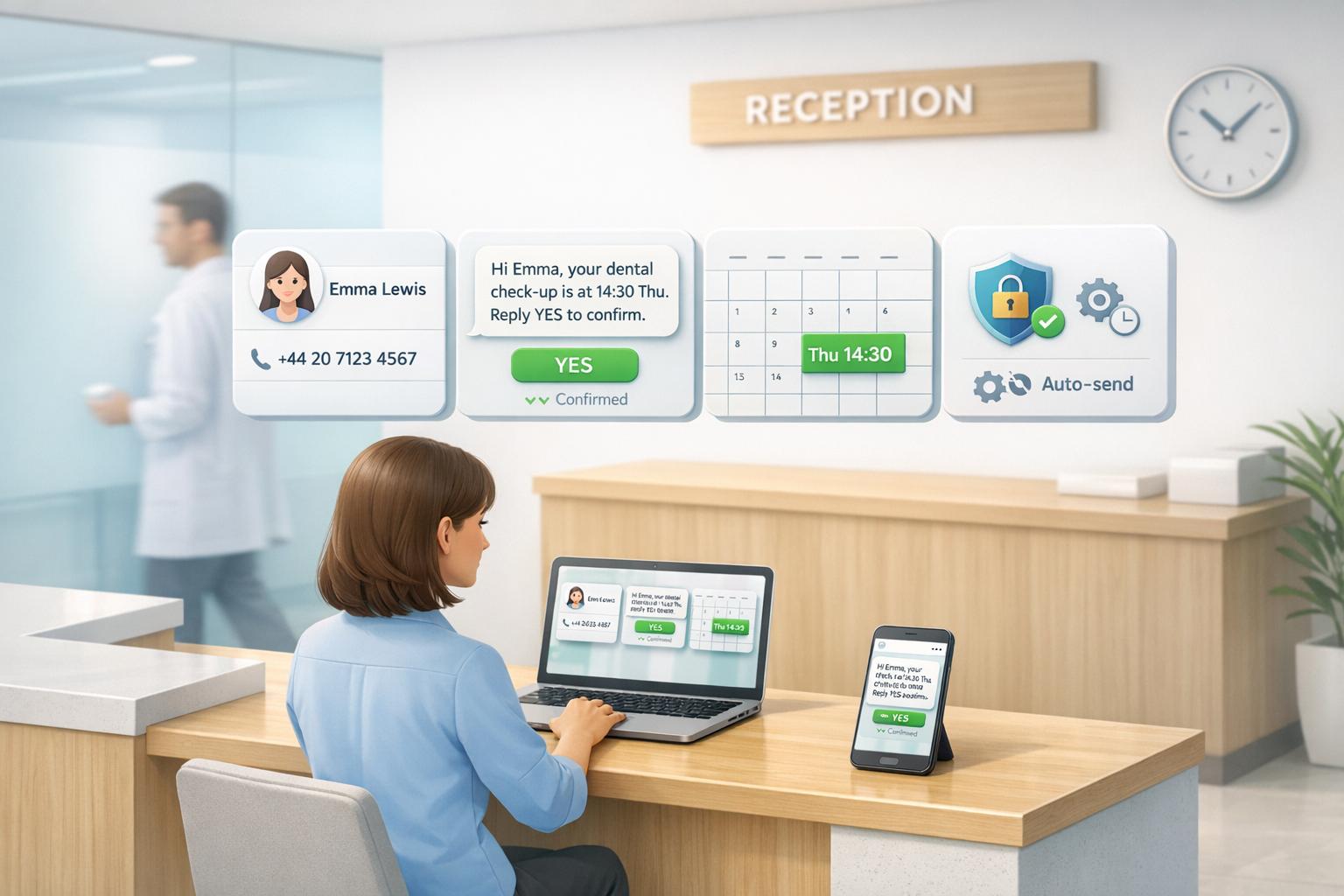
Unlike traditional one-way SMS, WhatsApp allows for two-way communication. Patients can reply with simple responses like “YES” to confirm or “NO” to cancel, and these updates are automatically reflected in your dental practice software [5]. To streamline communication and reduce costs, modern systems consolidate multiple same-day appointments into a single message [6].
This system operates through the WhatsApp Business API, which uses pre-approved message templates to ensure compliance and quality. Each message is personalised with placeholders for patient names, appointment times, and clinician details [5]. By automating these reminders, reception staff can focus on other tasks instead of making manual calls.
Benefits of WhatsApp Appointment Reminders for UK Dental Practices
WhatsApp reminders offer clear advantages for dental practices in the UK by improving patient engagement and attendance. The two-way communication feature makes it easy for patients to confirm, reschedule, or cancel appointments, cutting down on administrative effort [5].
Attendance rates see measurable improvements across various demographics. For example, reminders have been shown to increase attendance by an average of 4.2% among adult patients in the UK [1]. The results vary by age group: attendance among patients aged 61 and older improved by 73%, while those aged 20–25 saw a 25.3% drop in missed visits [1]. Women responded particularly well to reminders, with a 48.3% improvement compared to 36.6% for men [1].
Younger patients, especially Gen Z, benefit significantly from text-based reminders. Around 74% of this group report feeling anxious about phone calls, making WhatsApp an effective alternative [1]. Follow-up reminders also improve clinical outcomes; for instance, UK dental practices using multiple WhatsApp reminders achieved a 91% compliance rate with post-treatment instructions [1].
GDPR Rules for WhatsApp Reminders in UK Dental Practices
While the benefits are clear, it’s important to understand the GDPR requirements specific to UK dental practices.
Under UK regulations, appointment reminders are considered “service communications” rather than direct marketing, provided they strictly relate to care the patient has already agreed to receive [2]. This means dental practices can rely on “legitimate interest” as their legal basis under GDPR.
“Under UK rules, a recall reminder or appointment confirmation is generally treated as a service communication rather than direct marketing, provided the message is clearly related to care the patient has already agreed to receive.” - Silverstone AI Editorial Team [2]
However, dental practices must adhere to core data protection principles. Your privacy notice and Data Processing Agreements should clearly outline the use of automated messaging [2]. Collect only the data necessary for the reminders, ensure patient contact details are accurate, and provide an opt-out option in every message so patients can withdraw consent easily [7].
It’s crucial to avoid including promotional content - like special offers for teeth whitening - in these reminders. Doing so would classify the message as “direct marketing”, which requires stricter opt-in consent under PECR. Keeping messages strictly focused on clinical and service-related information ensures compliance with GDPR and other regulations.
How to Set Up Dental WhatsApp Appointment Reminders with Software
Using dental software like Remedico, you can set up WhatsApp reminders in just four straightforward steps. This process connects your practice calendar to WhatsApp, ensuring appointment reminders are sent automatically and efficiently.
Here’s a breakdown of the steps to integrate WhatsApp reminders with your Remedico software for smoother communication.
Step 1: Create a WhatsApp Business Account
Start by creating a WhatsApp Business account with your practice’s phone number. Unlike personal accounts, a business account offers features like automated greetings, quick replies, and message labels, which help streamline communication with patients [9]. Add your clinic’s logo, business name, and operating hours to the account to establish credibility and build patient trust.
It’s important to use a dedicated phone number for your practice, as this ensures patients immediately recognise the sender as your clinic. After setting up your account, connect it to Remedico’s API to enable the automatic transfer of appointment data.
Step 2: Connect WhatsApp to Your Dental Software
Next, link your WhatsApp Business account to your dental software via an API. Remedico integrates WhatsApp directly into its practice management system, pulling patient details and appointment schedules automatically [1]. This connection allows the software to send reminders on your behalf and process patient responses. For example, if a patient replies with “YES” or “NO”, the system updates their appointment status automatically [5].
Once the connection is established, you can move on to customising your message templates.
Step 3: Create and Submit Message Templates
Develop short, clear message templates that include personalisation tags like [First Name], [Date], and [Time]. These tags automatically insert patient-specific details into each message, making them more engaging. Keep your messages under 150 characters and focus on a single action per message. Here’s an example:
“Hi [First Name], this is [Practice Name]. You are booked for a cleaning on [Day], [Date] at [Time]. Reply YES to confirm or call [Phone] if you need to reschedule.”
Submit these templates through your software for WhatsApp’s approval. Ensure your messages stick to service-related content and avoid promotional language, as this helps you comply with UK PECR regulations [2].
Once approved, you can automate the reminder process and track patient responses.
Step 4: Automate Reminders and Track Patient Responses
Set up your software to send reminders at specific intervals. A common schedule includes a confirmation immediately after booking, a reminder 72 hours before the appointment, and a final prompt 24 hours prior [8]. Remedico’s Smart Calendar handles this automatically, sending reminders based on the appointment date and tracking patient responses through its dashboard. This system has been shown to reduce missed appointments by up to 60% [10].
To save costs and minimise confusion, the software can also combine multiple same-day appointments into a single reminder [6].
“If SMS helps patients turn up, pay, and rebook, then pricing models should support it, not punish it.” - Adrian Dray, CareStack [4]
For dental practices in the UK, Remedico offers 1,000 free WhatsApp reminders per month as part of its £99 per doctor subscription. This makes WhatsApp reminders a more cost-effective option compared to traditional SMS, which typically costs between 4p and 12p per message in the UK [4].
Real Example: A UK Dental Practice Using WhatsApp Reminders
Before: Problems the Practice Faced
UK dental practices often deal with a frustrating paradox: phones ringing off the hook and appointment books looking full, yet hygiene appointments being missed and overdue recalls piling up. The issue isn’t about attracting patients - it’s about the follow-up process breaking down when reception teams are overwhelmed [2].
One recurring problem was patients with multiple appointments on the same day, such as a check-up and a hygiene session. They’d receive separate reminders for each, which led to confusion about the timing [6]. On top of that, the practice struggled with Did Not Attend (DNA) rates, which directly impacted revenue. Even with packed schedules, inconsistent manual reminders meant missed confirmations and unfilled slots [2].
These challenges made it clear the practice needed a more streamlined communication method.
After: Results from WhatsApp Integration
To tackle these issues, the practice implemented automated WhatsApp reminders, and the results were impressive. A 10-year British Open University study of UK general practices showed that automated reminders reduced missed appointments by 42.8% [1]. Among the different communication methods tested, WhatsApp and SMS reminders had the lowest no-show rate at 1.9%, outperforming email (2.68%) and phone calls (3.49%) [1].
The reception team saw a huge time-saving benefit by cutting out manual follow-up calls. Patients could simply reply “YES” or “NO” to confirm or cancel their appointments, with the system automatically updating the schedule [5]. For those with multiple appointments on the same day, the software sent one combined message, eliminating confusion and reducing costs [6]. Interestingly, the data also revealed that women were 48.3% more likely to attend after receiving automated reminders, compared to 36.6% for men [1].
This shift not only made the practice more efficient but also improved patient communication and attendance. It reduced the administrative workload while ensuring patients stayed engaged and on top of their appointments.
Key Takeaways: Using WhatsApp Reminders in Your UK Dental Practice
Main Benefits of WhatsApp for UK Dental Practices
Switching to WhatsApp reminders can make a noticeable difference in reducing missed appointments. For example, SMS reminders result in a 1.9% no-show rate, compared to 2.68% for emails and 3.49% for phone calls [1]. For dental practices in the UK, this means fewer empty slots and more revenue from booked appointments.
There are also operational perks. Automated reminders cut down on time spent chasing patients manually, freeing up reception staff to focus on providing better patient care [2]. Plus, when patients respond with a simple “YES” or “NO” to confirm or cancel, your calendar updates automatically [3]. Sending one message to cover multiple same-day appointments also helps reduce confusion and keeps costs in check [6].
Attendance rates improve significantly with automated reminders: a 48.3% boost for women, 36.6% for men, and up to 73% for patients aged 61 and older. Gen Z patients, often hesitant about phone calls, also benefit from the ease of messaging [1]. These features make WhatsApp a practical tool for streamlining appointment management.
Why Remedico Works Well for WhatsApp Integration
Remedico takes the benefits of WhatsApp reminders and integrates them seamlessly into your existing EMR system. This means your team can manage patient communication without jumping between different platforms [1]. Its AI-powered text generator creates tailored message templates for various patient needs - like overdue check-ups, hygiene appointments, or reactivating patients who missed appointments - all with just a few clicks [1].
For cost-conscious practices, Remedico offers 1,000 free reminders per doctor each month, helping to save both time and money [3]. If you want to go further, the AI assistant, Remindico, can handle scheduling calls with natural-sounding speech, automating repetitive tasks while leaving sensitive or clinical matters to your team [1][2]. This combination of text and voice automation ensures efficiency without compromising the personal touch patients expect.
FAQs
Do patients need to opt in for WhatsApp reminders?
Patients don’t have to give separate permission to receive WhatsApp reminders. Typically, these are integrated into the appointment confirmation process. For example, patients can confirm their attendance by simply replying ‘YES’. From there, practices can automate reminders without needing extra consent. :::
Can WhatsApp replies auto-update my dental diary?
No, WhatsApp replies cannot automatically update your dental diary. While WhatsApp is handy for sending appointment reminders and receiving confirmations, any updates to your diary generally need to be entered manually or managed through a direct integration with your practice management software. :::
What’s the cheapest way to run WhatsApp reminders?
The most budget-friendly way to handle WhatsApp reminders is by utilising dental practice management software equipped with automated messaging features. These systems can send reminders through WhatsApp with minimal or no additional charges, cutting out the need for manual calls or juggling several messaging platforms. Opt for software that integrates smoothly with WhatsApp to streamline processes and keep costs down. :::